The Fifth Toy Story Miracle: A Creative and Heartfelt Sequel Battling the Digital Invasion

According to the CinemaDrame News Agency, in the world of Toy Story, play is always the ultimate purpose, and the fifth installment of this franchise proves to be just as enchanting and captivating as its predecessors.
After five films, picking a favorite from this animated pantheon is as challenging as choosing the best Beatles album. You might lean toward one, but why choose? The reality is that the Toy Story movies are all beautiful, brilliant, distinct, and yet completely complementary. The franchise offers a pure reflection of childhood, nostalgia, adolescent pride, and sheer cinematic magic. By this measure, if the original film (which remains my personal favorite) is Meet the Beatles! and the third is Sgt. Pepper’s Lonely Hearts Club Band, this highly arresting fifth entry feels like Abbey Road—a magnificent culmination that mirrors all the magic of the series, providing what could very well be a flawless conclusion.
As the franchise has evolved over the past thirty years, loss has emerged as its bittersweet, overarching theme. The grief, yet inevitability, of that loss has forced toys like Woody, Buzz Lightyear, or Jessie (the cowgirl who now takes center stage) to watch their owners grow up and move on. This dynamic effectively mirrors that of parents watching their children step out into the real world. These films have always grappled with the specter of obsolescence and its closely linked counterpart: rebirth.
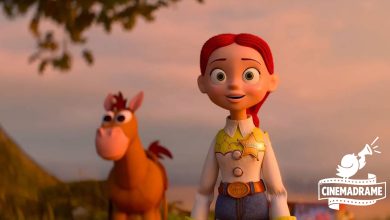
Now, in Toy Story 5, a new theme emerges that speaks directly to our modern era: the disappearance of actual play. Bonnie, now 8 years old, still plays with Jessie (voiced by Joan Cusack) and her loyal horse, Bullseye (voiced by Alan Cumming), but she seems unable to connect with other kids in her neighborhood. Why? Because none of the other children play with toys anymore. Every child has become entirely absorbed by the screens of phones and tablets—a technological invasion that the film portrays as a fundamental, isolating shift in childhood interaction.
“The age of toys is over!” an old, discarded plaything mournfully declares. Even Bonnie’s parents seem to capitulate, purchasing her a kid-friendly tablet named LilyPad (voiced by Greta Lee). Bonnie quickly grows attached to it, discovering that online connectivity allows her to make instant digital “friends.” Yet, as the movie deeply understands (and many adults forget), friends made through technological connections can never replace the bond forged by sharing a physical space.
What Toy Story 5 champions is imaginative, creative play—something that transcends mere entertainment to serve as a vital tool for children to project their inner worlds onto reality. The film brings these imaginative moments to life through vibrant, high-concept comedic sequences that spring directly from a child’s mind.
But today’s world no longer prioritizes that space. During a playdate coordinated through the tablet, Bonnie’s new tech-addled peers mock her cruelly for clinging to her outdated toys. As the narrative unfolds, Jessie and Bullseye find themselves at the farm once owned by Emily (Jessie’s former owner), where a 9-year-old girl named Blaire now lives. However, steering Bonnie back to real-world play won’t be easy. The mission requires complex plans orchestrated by Jessie and Woody (voiced by Tom Hanks), who now feels like an elder statesman cowboy. They are joined by the old gang, a group of legacy tech devices caught between the traditional and digital eras, and a factory-reset army of Buzz Lightyears (voiced by Tim Allen) stuck in demo mode who serve as a chaotic combat force.
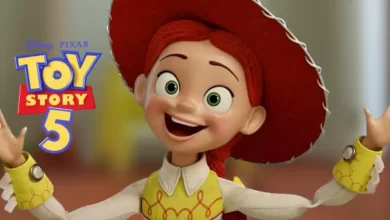
Legendary Pixar veteran and WALL-E mastermind Andrew Stanton takes the directorial reins of the franchise for the first time, crafting a narrative layered with depth and emotional resonance. Where a lesser film might reduce the story to a simplistic battle of good toys versus bad screens, Toy Story 5 does not demonize digital life; instead, it frames it as a new territory in the childhood cosmos. The plot is intricate, but everything funnels into Jessie and her team’s efforts to foster a genuine, physical friendship between Bonnie and Blaire—two girls whose imaginations still thrive in the tangible world. Joan Cusack’s high-energy voice work makes Jessie deeply endearing, and her romantic dynamic with Buzz Lightyear (who is eager to propose) provides genuine, laugh-out-loud comedy. Meanwhile, Tom Hanks infuses Woody with a vulnerable, weary, yet classic dignity.
While Toy Story 5 thrives on peak cinematic joy (the climactic wedding sequence must be seen to be believed), it also delivers moments that hit like an emotional punch to the gut. The film confronts a profound question: How will children connect with one another in an age that threatens to mature them too quickly by virtualizing everything? The movie’s message is clear: slow down, be present, and play. The joy you take from life is ultimately equal to the joy you make.