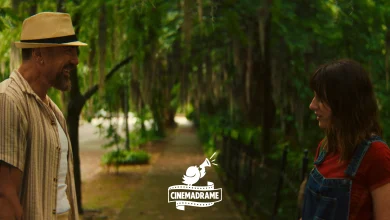
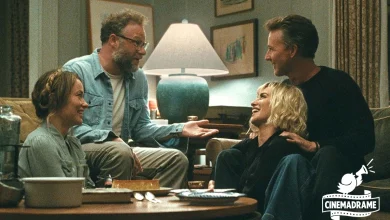
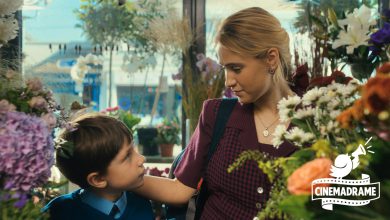
“Blue Heron”: Review of Sophie Romvari’s Stunning Debut Feature on Memory Lapses and Human Remembrance
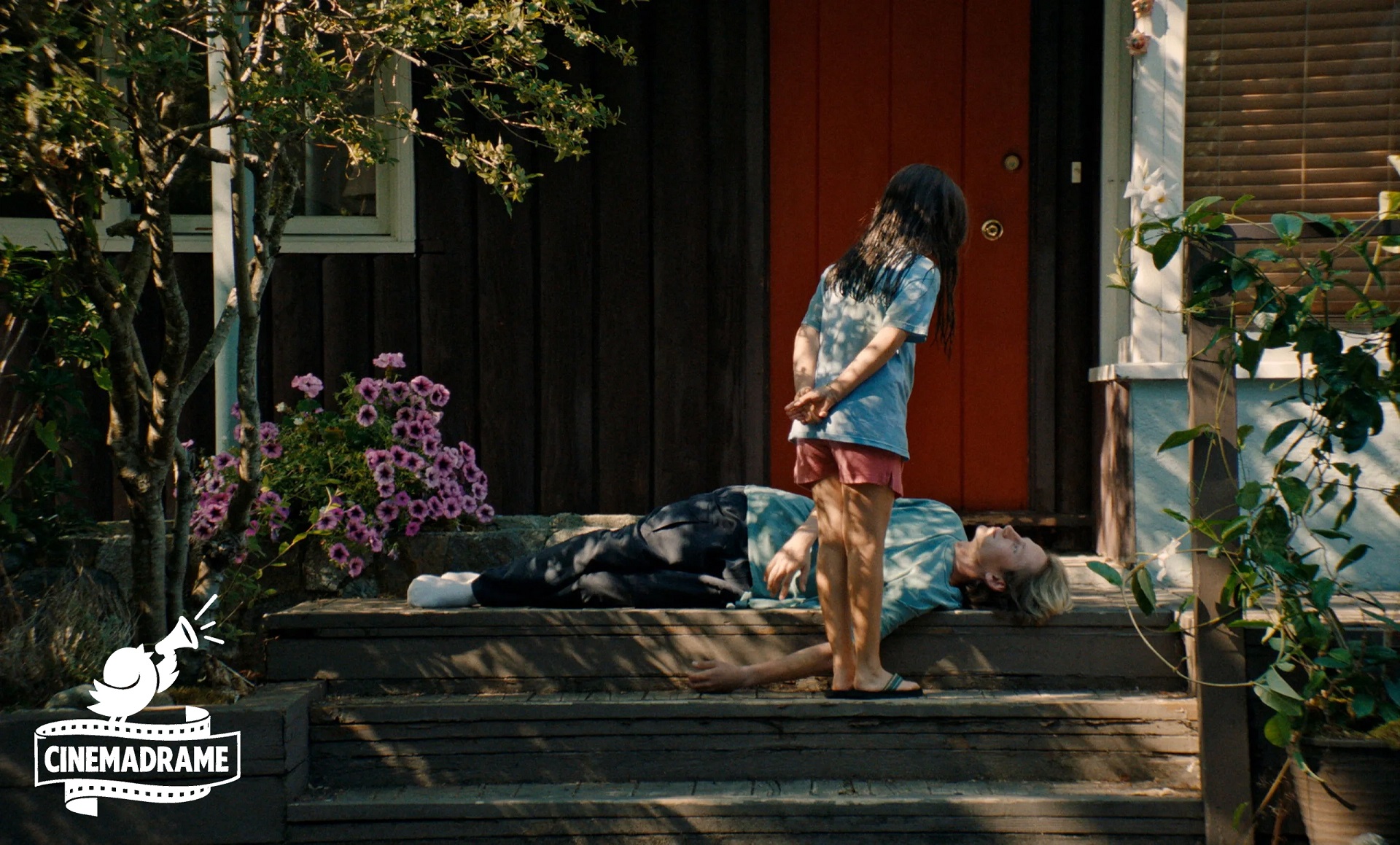
According to the CinemaDrame News Agency, the Canadian–Hungarian filmmaker, drawing inspiration from her own childhood, has created a bold and intimate work that, in terms of mood, can evoke films such as “The Invention” and “Sunburn.”
It seems that part of the reason behind a recent wave of filmmakers in their thirties gravitating toward analog media and textures lies in a kind of distancing from today’s digital, touchless world—an environment in which human experiences, especially grief, are never processed in the same way. The film “Sunburn” is the most well-known example of this trend, which was continued this year in “The Invention” by Courtney Stevens, where Kali Hernandez used her late father’s old 1990s television footage to reconstruct the aftershocks of his death.
Sophie Romvari’s “Blue Heron” moves in a similar direction: a story of a protagonist who revisits her pre-millennium childhood memories through home video clips and faded recollections. However, the parallels should not be overstated, as the Canadian–Hungarian filmmaker’s debut feature is so distinctive and formally inventive that it is difficult to fit within familiar categories.
Although the film is understandable without knowledge of the director’s personal background, it is in fact the result of more than a decade of artistic development. Romvari, who has been active in international festivals since the mid-2010s, has often blurred the line between reality and fiction in her short films. In works such as Still Processing, she appears on camera herself, and in a 2020 short she revisits old family photographs while dealing with the loss of her brothers—a theme that is most closely echoed in “Blue Heron,” though this time she stands behind the camera.
In her first narrative feature, Romvari creates one—or perhaps several—avatars of herself, possibly two or even three, depending on how a given narrative fragment is interpreted. This choice reflects a bold formal expansion of her cinematic approach, one that focuses on fragmented identities and attempts to reconstruct them through their emotional origins, even if such reconstruction is never complete or fully accessible.
The film opens with an off-screen narrator (Amy Zimmer), whose voice sets the tone and subtly indicates the perspective from which the story will unfold. She says: “It’s true I was angry at him for much of my life… the older I get, the less I feel I truly knew him… thank you for your memories, because now they are all I have.”
The opening credits roll over images of hand-drawn maps made by a teenager, featuring fictional places such as “Fantasyville.” In reality, these maps belonged to one of Romvari’s brothers but are attributed in the film to the character Jeremy, the teenage brother of eight-year-old Sasha. The story takes place in late-1990s Canada, where a Hungarian immigrant family is moving into a new home on Vancouver Island, though this fresh start is accompanied by tension.
The father, the family’s breadwinner, spends most of his time in a dark room working on a large computer, while the mother is left to entertain the children. Meanwhile, Jeremy’s condition becomes increasingly concerning: a quiet teenager with unpredictable and sometimes dangerous behavior, ranging from shoplifting to disappearing during storms or damaging the house.
Amid this tension, the mother tries to prevent Sasha from getting too close to others, fearing that rumors about her brother may lead to her social isolation—a concern entirely understandable for an immigrant family. Jeremy appears to live in his own mental world, one inaccessible to those around him, even doctors who cannot fully explain his behavior.
Yet the film also shows brief but meaningful moments of affection toward his siblings, such as a scene on the beach where, despite distancing himself from the family, he ultimately gives Sasha a “blue heron” keychain.
Much of the narrative is seen from Sasha’s perspective, though the film is not limited to it. The director avoids traditional point-of-view shots, instead using long lenses and occasional zooms to create both distance and intimacy. The cinematography and framing make the house feel almost wall-less, with tension constantly permeating the interior space.
Later, the film even presents scenes that Sasha could not have witnessed—reconstructed or imagined conversations between the parents. This narrative choice leads to a major structural shift in the second half, marked by a roughly twenty-year time jump. In this section, the adult narrator is the grown-up Sasha, now a filmmaker herself, attempting to understand her past and her brother’s fate through her art.
This bold structural transformation turns the film from a family portrait into a deeply moving and complex work. Its central concern is the idea that our incomplete memories are not restored through perfect recall, but through a deeper understanding of emotions and others’ perspectives—even if such understanding does not always lead to certainty or closure.
If you have ever wondered how one might come to terms with a younger version of oneself or a past filled with ambiguity, this film may be one of the most affecting cinematic experiences of the year—both painful and strangely comforting.