Emily Watson Opens Up About Growing Up in a Religious Cult and Nearly Passing on ‘Breaking the Waves’
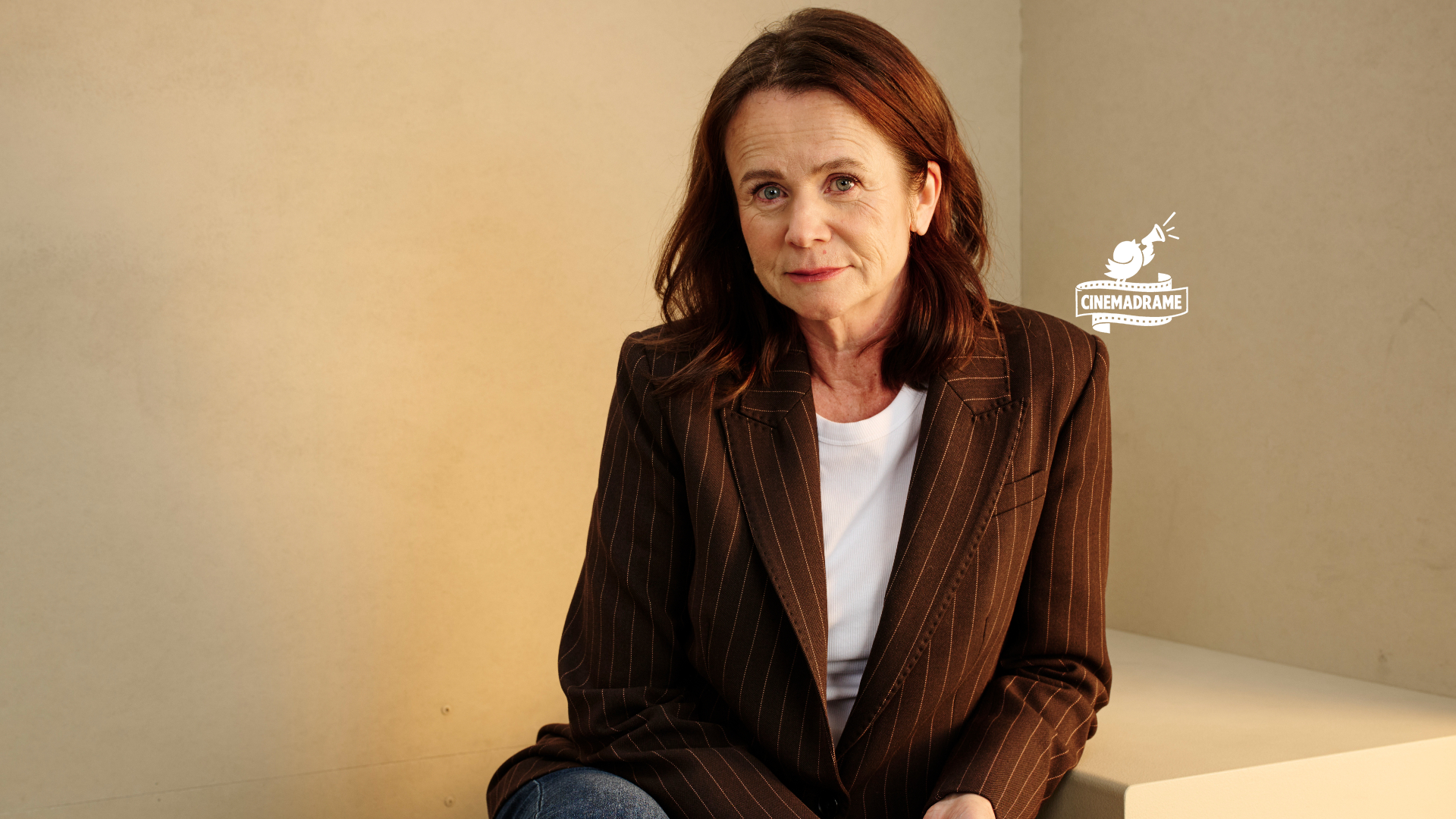
According to CinemaDrame News Agency, Emily Watson is one of today’s most acclaimed actresses, boasting multiple Oscar, Golden Globe, and BAFTA nominations, alongside a Berlin Silver Bear, a European Film Award, and a Screen Actors Guild Award. However, growing up in a religious cult nearly ended her brilliant career before it even began.
The “Chernobyl” star spoke candidly during the Sarajevo Film Festival—where she served as jury president and received the Honorary Heart of Sarajevo award—about her experience growing up in the School of Economic Science. The London-based organization advocates conservative values with strictly traditional gender roles and rigid sexual ethics. Former members have repeatedly described it as a cult, a new religious movement, and a pseudo-religion—a characterization Watson agrees with.
Recalling that period, she said: “Parts of it were lovely and parts of it were very strange. I think a lot of artists have things in their childhood that they have to undo. I was born into a very loving family, but I was brought up in a kind of strict religious cult. As a young person, I was very fanatical and faithful to those principles, and I felt very strongly about them. So it took me a long time to find my own way.”
Watson credits acting with “saving her life.” Although she began her stage career with the Royal Shakespeare Company, it was Lars von Trier’s “Breaking the Waves” that brought her international renown. In the 1996 drama, Watson played Bess McNeill, a young woman living in a repressed, deeply religious community in northern Scotland who falls in love with a Danish oil rig worker played by Stellan Skarsgård. When he suffers a life-altering accident, Watson’s character embarks on a path that conflicts with her community’s strict moral code.
When “Breaking the Waves” premiered at the Cannes Film Festival in 1996, Watson’s religious upbringing was not widely known. According to the actress, it took a lifetime to analyze and digest her childhood, but she now sees clear parallels between her personal life and the breakthrough role that earned her a first Oscar nomination.
Speaking about the character of Bess, she said: “I knew I had an affinity with the character. There was an interesting moment when I told the people at the School of Economic Science that I was going to do a film, and when they asked what it was about, they called me in and told me in no uncertain terms that I shouldn’t do it. I was told to go my cheap, tawdry way.”
She continued: “That moment was a real rupture and fault line. That was where I had grown up, where my friends were, but I turned my back and walked away. I was terribly upset and devastated, but at the same time I felt my heart soaring—an unbelievable freedom. In that moment, I knew I had to trust that feeling because my true self was putting me on the right path. But that sense of rupture felt like a nuclear explosion, encountering light and energy… all of those emotions are in the film. A big part of why the role succeeded is that I was like an electric wire pulled out of its socket.”
Despite this deep harmony between art and real life, Watson did not speak to Skarsgård about her upbringing until 2016, when they collaborated again on the hit series “Chernobyl.” She recalled: “He was genuinely shocked. At the time of making [‘Breaking the Waves’], it was deeply personal to me, and I didn’t fully understand what was happening to me.”
Over the past decade, Watson has spoken much more comfortably about her past, attributing it to the broader societal understanding that “examining childhood trauma is healthy.” She added: “In the early 1990s, the conversation wasn’t happening the way it is today. It took a lifetime to untangle all of this. In 1996, I couldn’t articulate any of this and was extremely defensive.”
That defensiveness was fully evident during her appearance at the Cannes Film Festival for “Breaking the Waves.” Recalling the overwhelming press conference at the French event, Watson said she only now realizes how “guarded and closed” she appeared. The high-pressure atmosphere at Cannes forced the young actress to keep her guard up, to the point where her only thought was: “I want to seem like the most ordinary, boring person in the world because letting people inside and making them aware of my life is not safe.”
Her parents, who remained affiliated with the religious group, accompanied her to the festival. She noted: “It was a somewhat uncomfortable situation because on one hand they were supporting me and were very kind. My father turned the color of this [white] dress after walking out of the screening—any father would react that way seeing that film. But at the same time, they didn’t defend me within that organization, so it was a very complex situation. But as time went on, we matured, talked, and our relationships became good.”
Navigating the Oscar campaigns for both “Breaking the Waves” and Anand Tucker’s “Hilary and Jackie” was equally exhausting, but Watson believes awards promotion in recent years has become “much more extreme”: “The commercial side of it is painful because it’s not a true meritocracy; everything revolves around money. That’s what makes a festival like Sarajevo so beautiful. Swimming in the river of storytelling here is so pure and enjoyable.”
Elsewhere in the conversation, Watson expressed her desire to work with more female directors, although she has had few opportunities to do so throughout her career. She emphasized: “It’s not my fault, but the structure of the film industry. There are certainly many prominent female directors, but reaching that level is much easier for men.” She described working with Chloé Zhao on “Hamnet” as “incredible,” adding: “She takes you on a spiritual journey and builds the film around it.”
In response to a question from a Palestinian attendee about the struggles of marginalized actors breaking into the competitive film industry—particularly those working in war-torn countries—Watson said imagining the difficulty of that path requires an “imaginative leap”: “What I tell everyone is that Shakespeare belongs as much to Palestine as he does to anywhere else in the world.”
Recalling watching Michael Winterbottom’s “Welcome to Sarajevo” the night before, the actress noted how “storytelling and advocating for a place or a people can be immensely powerful. We are all in that river of creativity. I completely understand that resources are very limited, but I believe a camera is a camera, and if you are open, it can see you.”
Looking ahead, Watson is set to appear in the second season of HBO Max’s “Dune: Prophecy” and Mira Nair’s historical drama “Amri.” She also revealed to Screen International during the Sarajevo Film Festival that she will star in Mackenzie Crook’s directorial debut, “Mars Express,” alongside Toby Jones. The film tells the true story of Colin and Judith Pillinger and their late-1990s mission to find life on Mars.