Uncertainty Over Elon Musk’s Attendance at Paris Hearing; Telegram CEO Voices Support for Tech Figure
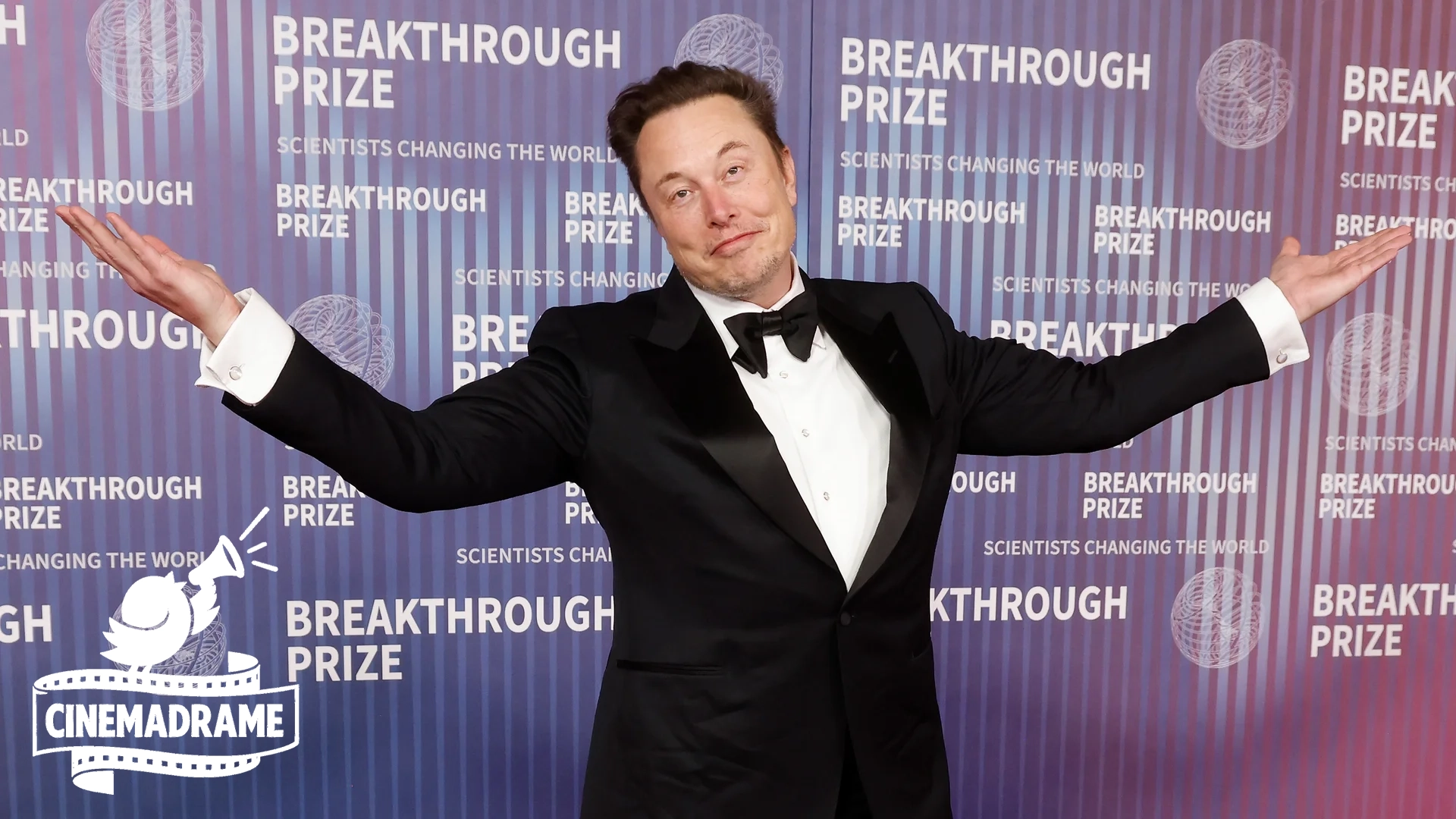
According to the CinemaDrame News Agency, following Elon Musk’s summons to Paris to respond in a case related to the X platform, it remains unclear whether he will attend the hearing—an issue that has drawn further attention amid public support from the Telegram CEO for the controversial tech entrepreneur.
Elon Musk was called on Monday to participate in a hearing in Paris, part of an investigation into the X platform. The case involves allegations concerning the platform’s algorithmic systems, as well as the role of the Grok AI tool in the dissemination of Holocaust denial content and fabricated explicit images.
However, there has been no official confirmation regarding whether the tech billionaire will participate in this voluntary interview. Additional sessions with other X employees in France are also scheduled later this week. Some French media outlets have speculated that Musk may not attend, though this has not been confirmed.
The Paris prosecutor’s office had officially announced in early February that Elon Musk and former X CEO Linda Yaccarino, who stepped down in July 2025, were summoned for this voluntary hearing on April 20.
The summons followed a cybercrime unit raid on X’s headquarters in Paris on the same day, conducted in cooperation with Europol.
This inspection and the related hearings are part of an investigation launched after a January 2025 report by French politician Éric Bothorel, who raised concerns about X’s algorithms and their potential influence on automated data-processing systems.
In February, the scope of the investigation was expanded to include scrutiny of Grok’s generation and dissemination of Holocaust denial content, as well as the distribution of millions of sexualized images.
The latter reportedly surged between late December 2025 and early January 2026, coinciding with the introduction of a new image-editing feature. Following widespread backlash, the platform imposed restrictions preventing Grok from editing real individuals’ images in ways that would depict them as nude or in inappropriate attire.
In response to the summons, X stated in February that the investigation is politically motivated.
Meanwhile, the Wall Street Journal reported that the U.S. Department of Justice has refused to cooperate with French authorities in the case, describing the investigation as an attempt to restrict freedom of expression.
A letter cited by the newspaper argued that the probe seeks to use France’s criminal justice system to control the free exchange of ideas and opinions in public discourse—an action it claims conflicts with the First Amendment of the U.S. Constitution.
Elon Musk has also received support from Pavel Durov, founder of the Telegram messaging platform, who himself is under pressure from French authorities.
In a statement, Durov said that France, under President Emmanuel Macron, is losing credibility by using criminal investigations to suppress freedom of expression and privacy rights. He also referenced the U.S. Justice Department’s refusal to engage in the case.
Durov was arrested in France in August 2024 and faced charges related to insufficient moderation of criminal content on Telegram, including money laundering and drug trafficking.
He was later allowed to leave France in March 2025 and return to Dubai, where he has lived since 2014. Durov had previously clashed with Russian authorities after refusing to provide user data of government protesters opposing the pro-Russian administration of Viktor Yanukovych.
He stated that he is facing similar charges in France, each of which could carry up to ten years in prison. Durov also declared his support for Musk and others targeted, as he put it, by Macron’s digital rights policies, adding sarcastically that “being under investigation has become a new kind of honor in Macron’s France.”
In contrast, Éric Bothorel, the French politician whose report triggered the investigation, rejected Durov’s remarks.
He stated that in any serious democracy, freedom of expression is not absolute and should not be, as it can otherwise become a tool for insult, threats, and misinformation.