Rising Demands for the Palestinian Flag to Be Raised at the Venice Film Festival; Artistic Director Responds
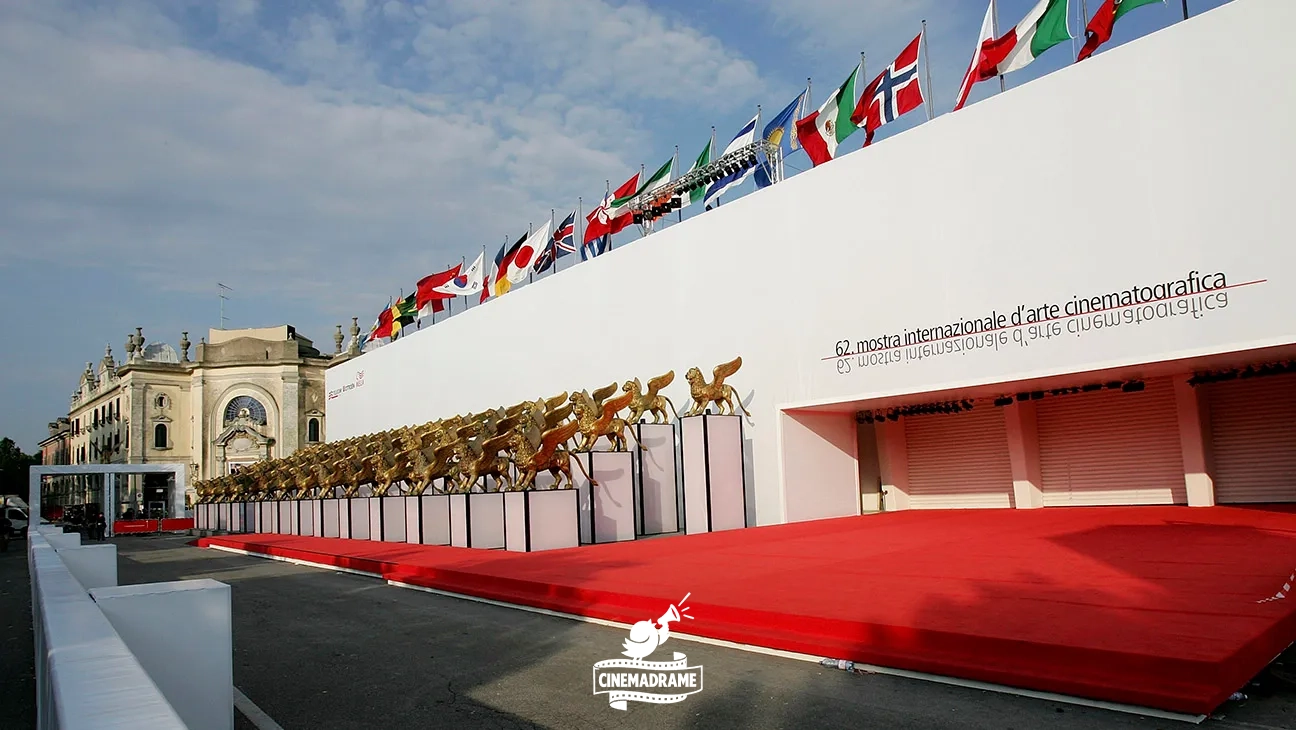
According to CinemaDrame News Agency, the “Venice for Palestine” coalition has once again called for the Palestinian flag to be raised at the 83rd Venice International Film Festival. Meanwhile, Alberto Barbera, the festival’s artistic director, stated in an interview with Italian media that fulfilling this request is not possible, as the Italian government does not recognize the state of Palestine as an independent country.
On the eve of the festival’s opening, the group published its first open letter requesting the raising of the Palestinian flag to formally recognize the presence of two films by Palestinian filmmakers in the official selection: Osama’s Citizen, directed by Ahmad Hassouna, and A Conversation with the Sea, directed by M Muayad Alayan.
Traditionally, the Venice Film Festival flies the flags of all countries represented by filmmakers in the official selection on the flagpoles of the Palazzo del Cinema, the principal venue for main screenings.
However, in a video interview with the Italian newspaper La Repubblica coinciding with the festival’s opening, Alberto Barbera stated that such a move is impossible. He said: “The Palestinian flag will not be there, because the Venice Biennale organization is only permitted to raise the flags of countries recognized by the Italian government. Unfortunately, Palestine is not yet an official country according to the Italian government, although we would like it to be and are working toward that. That is the reason for the flag’s absence.”
Barbera noted, however, that the approach of the festival and the Venice Biennale toward the issue is clearly reflected through its curated selections. As an example, he pointed to the selection of Kaouther Ben Hania’s The Voice of Hind Rajab at the previous edition—a moving film that reconstructed the events leading to the death of Hind Rajab, a five-year-old Palestinian child, by Israeli forces in Gaza.
The festival’s artistic director added: “This year, too, there are four films that address the Palestinian issue from various angles.” The other two works he referenced are The Jericho Road by Israeli filmmaker Amos Gitai, and Naza, a co-directed film by Yuval Abraham and Rachel Szor (directors of the Oscar-winning documentary No Other Land), which was added to the competition line-up at the last minute.
Emphasizing his point to La Repubblica, Barbera said: “There is no doubt about the Biennale’s position. For a cultural institution, the best way to declare political responsibility regarding such a complex issue is through the intelligent selection of films and the messages these works convey.”
In response to these comments, the “Venice for Palestine” coalition released its second open letter, titled “Raise the Palestinian Flag in Lido.” The text of the statement reads: “We had requested that the Palestinian flag be raised alongside the flags of all countries present in the official selection, but Alberto Barbera confirmed in his interview with La Repubblica that despite the presence of two Palestinian films, the country’s flag will not be at the festival.”
The statement continued: “The excuse put forward by the festival’s artistic director is that only flags of countries recognized by the Italian government can be flown, and according to him, ‘unfortunately, Palestine is not yet a country.’ He ignores the fact that Palestine is considered an official state by around 150 countries worldwide, including 35 European nations such as France, Spain, and the United Kingdom.”
The group noted: “It is necessary to remind the festival director that the Italian government has also implicitly recognized the state of Palestine, having accepted Mona Abu Amara as the ambassador of Palestine to Italy for years. Therefore, we reiterate our request to the festival director to raise the Palestinian flag for the remaining days of the event.”
The group also announced that its first open letter—initially signed by figures such as Roger Waters (co-founder of Pink Floyd), Annie Ernaux (Nobel Prize-winning author in Literature), and directors like Matteo Garrone and Isabel Coixet—has gathered over 1,000 signatures to date.
The “Venice for Palestine” campaign has taken shape amid growing international condemnation of Israel’s military actions in Gaza and the expansion of illegal settlements in the West Bank.
Against the backdrop of these developments, tensions in Hollywood over Middle East conflicts have also intensified—particularly after Paramount accused Mark Ruffalo over a post criticizing the merger of Paramount and Warner Bros. Discovery and raising concerns about Oracle’s role in supplying military technologies. Following these accusations, a group of Jewish artists and thinkers issued a statement supporting Mark Ruffalo.
Pointing to the recent backlash against Mark Ruffalo, as well as past criticisms leveled against Susan Sarandon and Vanessa Redgrave for their public support of the Palestinian people, “Venice for Palestine” once again urged festivals and cultural institutions not to hide behind administrative protocols.
The letter concluded: “We reiterate our request that all institutions, especially cultural ones, show courage, go beyond formal protocols, and take a clear stance beyond slogans—rather than leaving the burden of protesting genocide solely on the shoulders of artists and cultural activists at personal risk.”
The statement ends with a call to the public to participate in a peaceful demonstration scheduled for September 9 in front of the Italian Parliament in Rome, held under the slogan “Solidarity cannot be put on trial, and the voice of protest will not be silenced.”