Mike Schur: Paramount-Warner Bros. Merger Is an Existential Threat to Writers
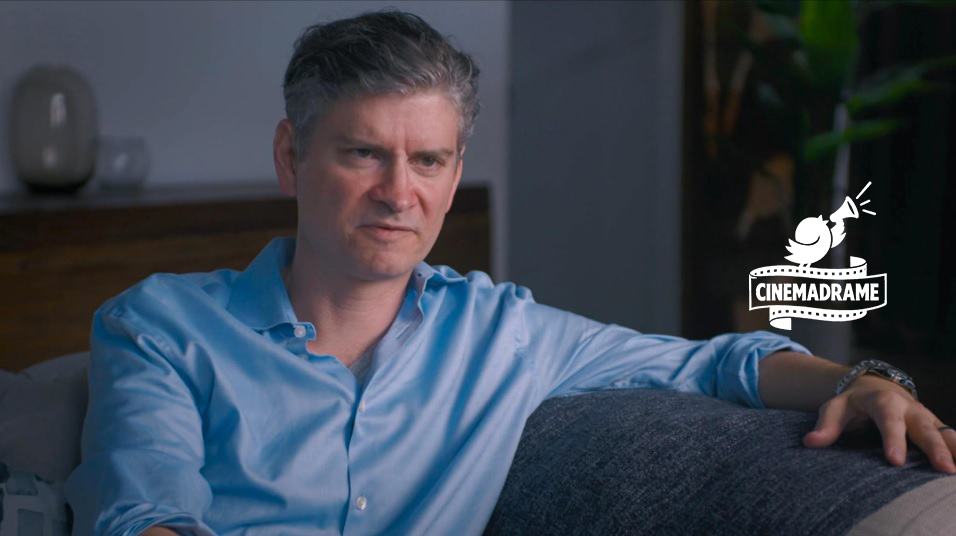
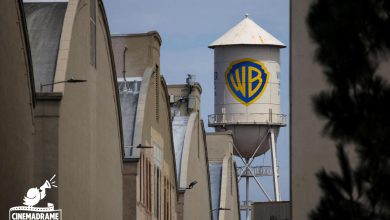
According to CinemaDrame News Agency, prominent comedy writer Mike Schur believes the merger of giants Paramount and Warner Bros. Discovery will have irreversible consequences for the core of film and television. When competition is eliminated, market functionality ceases—and that competition is currently being destroyed. The writer, whose credits include acclaimed shows like “Saturday Night Live,” “The Office,” “Parks and Recreation,” and “Brooklyn Nine-Nine,” examined the dimensions of this crisis.
One must begin with a clear reality: mega-corporate mergers in Hollywood hurt writers. They also hurt actors, directors, production designers, crew members, carpenters, drivers, electricians, and set decorators. They are bad for consumers, who will have fewer choices in entertainment as content becomes controlled by fewer executives with narrower vision. Mergers harm local businesses that lose their clientele and are detrimental to everyone—from top-level TV and film executives to entry-level assistants. This trend is bad for all except those at the very top: the billionaires who saddle the new companies with debt and pocket immense profits from the suffering of everyone else in the industry.
Any other claim heard or read regarding the hidden motives behind the Paramount and Warner Bros. Discovery merger should be cast aside, keeping this core principle always in mind: when a colossal entity—one of the few major media houses remaining in Hollywood—swallows another giant, fewer series and films get made, and tens of thousands of skilled, specialized Hollywood workers are either laid off or unable to find work. Therefore, taking a stand here has nothing to do with personal brand loyalty, feelings toward media conglomerates, or their political leanings. Though the writer has not frequently worked with Paramount or Warner Bros. Discovery, this represents another severe blow to an industry already bruised, strained, and suffocated by corporate greed.
When Paramount’s plan to acquire Warner Bros. Discovery was announced, writers once again felt the walls crashing down around them. Everyone knows what this merger entails—one fewer buyer for works, decreased demand for writing services, diminished leverage in contract negotiations to secure fair valuation for their labor, and less creative freedom. This is not a theoretical claim; all of this occurred just seven years ago when Disney swallowed Fox. The impacts will be tangible, measurable, and severe. For this reason, hundreds of industry workers have joined the Writers Guild of America’s challenge to block this merger, sharing experiences spanning more than 25 years in the business.
For absolute clarity, the author notes having enjoyed a highly successful career over the past 20 years. Bringing this up serves solely to point out an obvious truth: if someone in such a position witnesses and suffers the damages caused by reckless media consolidation, then that harm extends to everyone, with many facing far worse circumstances.
At the start of this career, major television studios operated as relatively distinct entities. Each was affiliated with a broadcast or cable network, yet they retained the capacity to sell projects to a broad spectrum of buyers, fostering genuine competition. That is how markets ought to function—a point politicians and pundits seem to forget when advocating for harmful mergers. Over the past two decades, however, this competitive framework has collapsed as companies integrated horizontally (absorbing one another to create mega-corporations) and insulated vertically (buying content almost exclusively from within their own walls). When competition vanishes, market functionality stops—and that competition is rapidly dying out.
Media companies used to buy shows from one another—that is how “Seinfeld” (produced by Sony) aired on NBC, and “Modern Family” (produced by 21st Century Fox) ended up on ABC. Today, cross-company sales are exceptionally rare. Producing a show through an entity like ABC/Disney largely means it will air on Hulu, Disney+, or ABC. Working for a different studio frequently means doors at Disney are closed, as they prefer to buy strictly from their own in-house operations. The same holds true for most remaining companies. While streaming services do buy from third parties, they are less inclined to pay foreign studio fees, and studios are less likely to accept the terms offered by these services. The entire ecosystem is hardening and freezing; with fewer buyers overall, there are fewer opportunities to make anything.
Artists have been harmed in other ways as well. Studios once competed to offer overall deals to writers, securing exclusive rights to their output. Such deals rewarded consistent quality and offered a rare shot at stability in Hollywood—a steady paycheck instead of jumping from one wage check to the next across separate projects. Aggressive cost-cutting gutted this form of employment, and further consolidation threatens to eliminate it entirely. Why guarantee exclusive artist deals when the market lacks competition? Where else are they going to go?
The “take it or leave it” leverage of these studios has already grown immense, with writers paying the ultimate price. Combining Paramount and Warner Bros. will only exacerbate the situation.
Consumers will feel the strain of this consolidation as well. If Paramount and Warner Bros. merge, the new entity will become the single largest purchaser of original television and film programming in the United States. These two companies currently operate as distinct buyers directly competing for series and films, each maintaining its own brand identity and creative profile. An unexpected hit like “Hacks”—on which Mike Schur served as executive producer—was made possible precisely by this creative diversity. The creators pitched the show across town, but the sole offer came from an executive at HBO Max who possessed the vision, organizational latitude, and creative conviction to back an unconventional project. Had that person been replaced by a Paramount executive seeking a different style of show, “Hacks” might never have seen the light of day. Fewer buyers unequivocally means a narrower creative scope for audiences.
Once again, none of these outcomes need to be theorized. Disney’s acquisition of 21st Century Fox in 2019 demonstrated them all in full. Following the merger, Fox’s television development unit was absorbed into Disney. Disney’s studio priorities remained intact while Fox’s were halted. Writers who had built long-standing relationships with Fox were left adrift. On the film side, the Disney-Fox merger effectively erased Fox from wide-release feature films, cutting the combined entity’s theatrical output in half. Over 4,000 Fox employees lost their jobs.
Everyone faces these exact consequences with the proposed Paramount and Warner Bros. merger, which is why this outcome cannot be accepted as inevitable. The job losses alone could sound a death knell for the Hollywood community, with local Los Angeles estimates projecting thousands of lost positions. (Paramount CEO David Ellison has already threatened to move the merged company’s headquarters to Texas if his demands are not met.) The WGA and attorneys general from 12 states are currently challenging the merger on the grounds that it concentrates far too much power within a single corporate giant. The country has antitrust laws for a reason: to encourage competition that benefits both consumers and the workers who create the content they love. It falls upon everyone to support these arguments and fight tooth and nail to preserve what remains of this bruised yet resilient creative industry.
Mike Schur is a television writer, showrunner, and producer currently under an overall deal with Universal Television. His writing credits include “Saturday Night Live,” “The Office,” “Parks and Recreation,” “Brooklyn Nine-Nine,” “The Good Place,” and “The Comeback.” He has also executive produced numerous television projects, including “Hacks” and “Master of None.”