The Oscars Red Carpet Controversy: Was Everything Really Thrown Away?
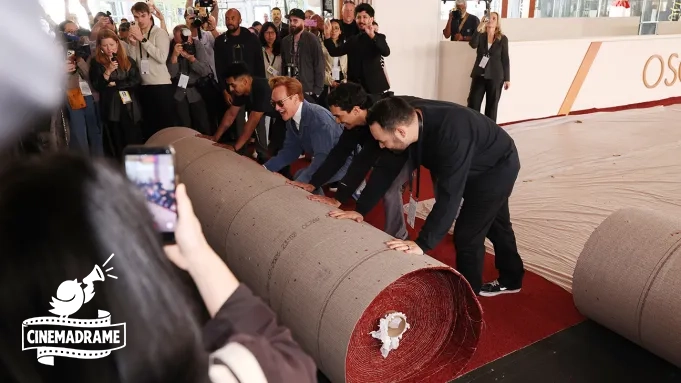
According to the CinemaDrame News Agency, a viral video showing the post-ceremony cleanup sparked controversy online, leading many to believe that the iconic Oscars red carpet is simply discarded after the event. However, a closer look reveals that the reality is more complex and often overlooked.
The red carpet at this year’s Oscars drew significant attention, but not only because of the celebrities who walked on it.
On March 16, a day after the 2026 ceremony, a production assistant named Paige Talia posted a TikTok video. In it, she showed up at the Dolby Theatre during the cleanup process and explained that she had hoped to take a piece of the Oscars red carpet home for use as a rug. The video then shows her discovering multiple rolls of the red carpet in trash bins, after which she cleans one piece and takes it home as a decorative item.
The video quickly went viral, gaining over six million views. Many users reacted with shock and disappointment, questioning how a carpet used for just a few hours could be thrown away so easily. As a result, the Academy Awards faced criticism over alleged wastefulness in Hollywood.
However, the reality is somewhat different.
According to Rob Teas, co-director of California’s Carpet Recovery and Recycling Program, the bins shown in the video were actually part of a recycling process. He explained that the carpets are taken to a fiber recycling facility in Vernon, Los Angeles, where they are processed into granular material. These pellets are then used to manufacture around 125 different types of products, including automotive parts and electronic device casings.
The Academy has also stated that the red carpet itself is made from recycled materials.
Nevertheless, this environmentally conscious approach is not yet widely adopted across the entertainment industry. Each year, hundreds of events are held in Hollywood—from film premieres to promotional gatherings. In many cases, red carpets are not reused or recycled afterward and often end up as waste, especially when they include custom designs or logos.
Rob Teas notes that many people are still unaware that carpets can be recycled. Currently, there are more than 179 drop-off centers across California collecting carpet waste, with 80 to 90 million pounds collected annually—though most of this comes from residential use rather than entertainment events. He is working to bring the entertainment industry into this recycling system and has even signed an agreement to recycle carpets from the Super Bowl event in Los Angeles. However, coordinating between different companies and event organizers in Hollywood remains challenging, and progress is slow.
He explains that in this industry, recycling is often not a priority, with the main focus being on quickly completing and moving on from events. As a result, once an event ends, the usual instruction is simply to “clean up and move on.”
In contrast, Sheila Morovati, founder of an environmental organization focused on waste reduction, believes carpets can be reused even without being broken down into pellets. She suggests donating them after events to schools or homeless shelters. She also proposes that studios maintain storage spaces for carpets—similar to costume warehouses—so they can be reused for multiple events.
Debbie Levin, director of an environmental media organization, also supports a rental-based system. She argues that new carpets do not need to be produced for every event and that rented carpets could be reused multiple times. According to her, a wide variety of colors and designs can still be provided, and logos are not necessary since cameras focus on people rather than the carpet.
Despite these proposals, implementing such changes requires careful planning and may be difficult in an industry primarily focused on visual presentation and fast event turnover. However, according to Rob Teas, carpet waste is a significant issue because these materials do not easily decompose and can remain in the environment for a very long time.
He emphasizes the importance of thinking about the future and next generations, as large volumes of waste accumulate in landfills and persist for years. Therefore, instead of being buried, these materials should be reintroduced into production cycles and transformed into new products.
This report was published in the 2026 Environmental Special Edition of The Hollywood Reporter.