30th Anniversary of Sleepers: Barry Levinson Revisits His Most Influential Film
The writer-director reflects on his star-studded drama, now available for the first time in 4K UHD

According to the CinemaDrame News Agency, when Barry Levinson made his feature directorial debut in 1982 with the autobiographical comedy-drama Diner, many expected him to continue making similarly personal, handcrafted stories. Levinson went on to fulfill that expectation with films inspired by his memories of his hometown Baltimore, such as Tin Men, Avalon, and Liberty Heights.
However, from the very beginning, Levinson diversified his career by embracing adaptations and projects that were not personally rooted. After Diner, he directed the major studio film The Natural, starring Robert Redford, followed by the fantasy project Young Sherlock Holmes (produced by Steven Spielberg), before returning to more personal filmmaking with Tin Men.
This pattern continued throughout his career, as he moved between original screenplays and assignment-driven projects, often—much like in Rain Man and Bugsy—finding a balance between commercial appeal and artistic ambition. Equally skilled in auteur-driven personal films and mainstream IP-based productions such as Disclosure and Sphere, Levinson became an unusual figure in Hollywood: an auteur filmmaker with a distinct style who was also comfortable working within the traditional studio system—a blend of John Cassavetes and Michael Curtiz in one artist.
Being a Levinson fan in the 1990s meant that in one year you could enjoy the offbeat comedy Jimmy Hollywood (a film only he could have made) and an adaptation of Michael Crichton’s Disclosure—the kind of film Hollywood produced in abundance at the time, but which felt unique thanks to Levinson’s visual imagination and intelligence.
Disclosure marked the beginning of a series of high-profile Warner Bros. projects based on bestselling novels, the second and best of which was Sleepers, Levinson’s 1996 adaptation of Lorenzo Carcaterra’s semi-fictional account. The film follows his harrowing childhood in a reform school and a later conspiracy among him and his friends to take revenge on those who abused them as adults.
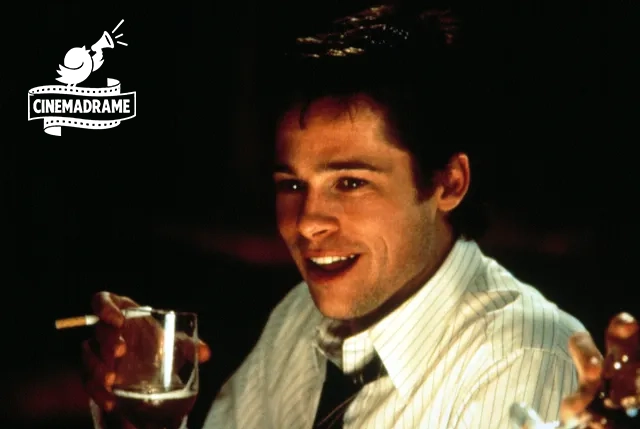
With its strong budget, an impeccable ensemble cast (including Brad Pitt, Kevin Bacon, Robert De Niro, Jason Patric, Dustin Hoffman, Billy Crudup, Minnie Driver, and others), and an outstanding score by John Williams at the height of his powers, the film stands as one of Levinson’s finest works from a period when he was delivering acclaimed films almost annually.
When asked about the diversity of his output at the time, Barry Levinson said it was driven more by instinct and taste than by any deliberate strategy. Speaking to IndieWire, Levinson said: “It’s always hard to explain why you want to do something you love. Something gets into you and you can’t let it go.”
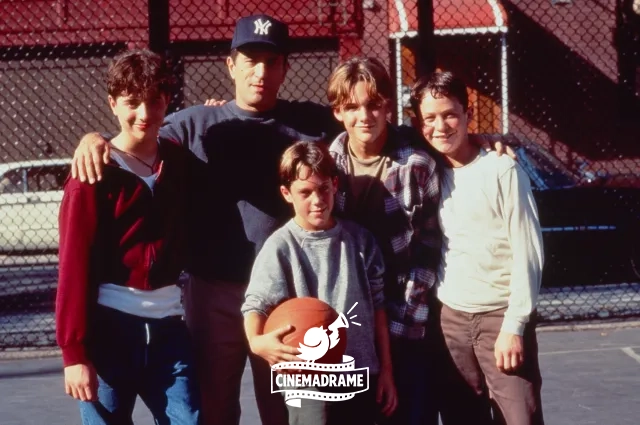
In the case of Sleepers, there was something about the long-term consequences of a reckless act—four young boys stealing a food cart and setting off a chain of events that leads to their imprisonment—that Levinson felt was worth exploring.
One of the most interesting aspects of Sleepers after 30 years is its restraint; although the film is violent and full of tense situations, Levinson and cinematographer Michael Ballhaus avoid melodrama and instead take a more subtle approach. This approach pays off in the film’s final moments, where the emotional impact of everything the characters have endured is felt with full force and without dilution.
Levinson told IndieWire: “I gravitate toward things that have a strong point of view, but I don’t want to force it onto the audience.” He noted that the key to Sleepers was maintaining a kind of “subtle naturalism” without sacrificing dramatic potential.
Levinson went on to say: “You have to find a style that is naturalistic but has an element that is visually engaging.” To that end, Levinson, Ballhaus, and production designer Kristi Zea (both of whom had worked on another 1990s New York classic, Martin Scorsese’s Goodfellas) committed to shooting in locations that matched the 1967–1981 time period, while also allowing for atmospheric lighting and deep, autumnal tones. The compositions are precise and hypnotic, although Levinson says he prefers to remain as free as possible on set and avoids restricting actors too early with specific movements or blocking.
Levinson said: “I know what I want, but I don’t necessarily want to produce it in a mechanical way. If you over-plan everything—and say, ‘Now stand here and go to the couch’—that can get into an actor’s head and affect their spontaneity. Even if you’re trying to get them to that point, you don’t want it to feel mechanical. I try to keep the set as informal as possible, because I’ve found that whenever you apply pressure, people tend to tighten up and you don’t get that sense of character and the unpredictable nature of emotions and connections.”
Thanks to the newly released 4K UHD edition from Warner Bros., Levinson had an opportunity to revisit Sleepers for the first time in decades, even though he is generally reluctant to rewatch his earlier films. Levinson said, “I’m glad they restored it, but personally, once I finish a film, I don’t go back to it. For me, you have an idea, you make it, you try to put everything together, and then the film is released into the world—and that’s it.”
At present, Levinson is looking ahead and hopes to complete one of two projects he has been working on. Once again showing his tendency to move between different tones and styles, he said, “One is a comedy and the other is a real drama—they’re completely different.” Although he is aware that the commercial landscape of cinema has changed dramatically since the days when studios produced and marketed his large-scale adult-oriented films with substantial budgets, Levinson remains determined to find a way to make the films he wants.
Levinson said, “I don’t want to say anything you don’t already know, but the industry is in a strange place right now. It doesn’t know where it’s going. I just try to do things that interest me, and they are very diverse. We made Disgrace [an adaptation of Philip Roth starring Al Pacino] for $2 million because no studio wanted to make a film of that nature. We had incredible actors and shot it in my own home in Connecticut. You have to look at what’s happening now and ask yourself: aren’t these the kinds of transitional periods the film industry has always gone through over the decades? Probably yes. So you just have to find a way to do what you want to do.”
Warner Home Video released Sleepers in 4K UHD on April 21.