‘Young Washington’ Review: A Dull, Textbook History Lesson Shrouded in Performative Patriotism
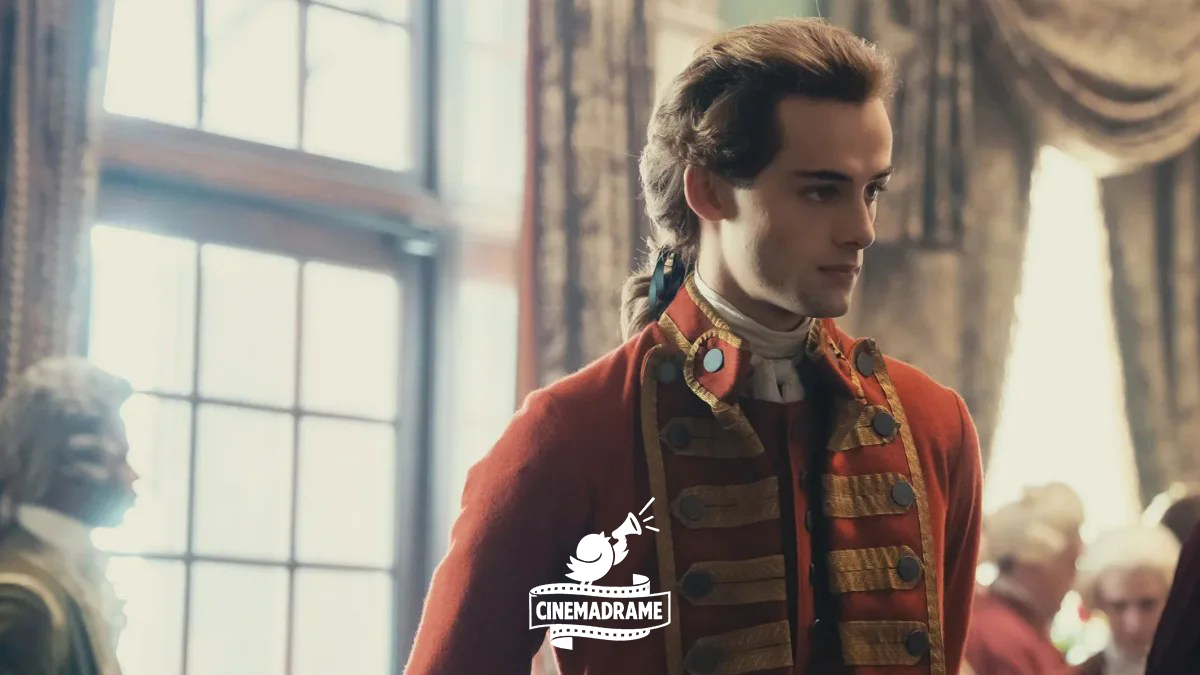
According to CinemaDrame News Agency, film critic Eleanor Wright writes in an exclusive review:
The latest cinematic offering centered on George Washington—released precisely alongside the 250th anniversary of American Independence—will first and foremost likely give history teachers a well-deserved break. It is easily imaginable that they might just play this film in classrooms for students while taking a comfortable nap themselves. Directed by Jon Erwin, Young Washington chronicles the early military adventures of America’s first president in his 20s during the French and Indian War, delivering an origin story framed remarkably like the current wave of superhero movies.
Following a brief prologue tracking a 12-year-old George (played by Will Joseph) mourning his father alongside his formidable mother (Mary-Louise Parker) and half-brother, the film flashes forward to 1754. George is now a tall, handsome 22-year-old (played by William Franklyn-Miller) driven by an intense ambition to rise above his middle-class social standing.
From Military Failures to Claims of Divine Protection
After his application to enlist in the British Army is rejected, George shrewdly aligns himself with Lord Fairfax (Kelsey Grammer), turning him into a mentor and patron. Leveraging his meticulous knowledge of surveying frontier territories under French influence, he successfully secures a commission as a major in the Virginia militia from Governor Robert Dinwiddie (played by Ben Kingsley with a bizarre Scottish accent).
His military track record initially stumbles, even leading his troops into a disastrous battle with heavy casualties. However, he quickly adapts and demonstrates his strategic skills, to the point where his survival during subsequent ambushes is attributed to “Divine Protection.”
The screenplay, penned by Jon Erwin, Tom Provost, and Diederik Van Rooijen, is cluttered with expository, preachy dialogue that reads more like captions in a comic book. We never truly get close to Washington’s internal world. This is less the fault of the lead actor and more a symptom of a shallow script that channels all its energy into repetitive battle sequences—clashes that, despite their accurate period-style choreography, are severely undercut by weak and unconvincing CGI.
Exaggerated Performances and Uncanny Locations
Despite its two-hour runtime, the film feels significantly longer, plagued by the same rigid, stiff quality found in similar historical dramas. The inclusion of A-list actors proves distracting; for instance, Andy Serkis delivers an interpretation of an arrogant British general so heavily exaggerated that, by comparison, his performance as Gollum in Peter Jackson’s masterpiece looks subtle and understated.
While Young Washington bathes in heavy patriotism, the production was ironically filmed entirely in Ireland—reportedly because no location in modern-day America could adequately replicate the untouched 18th-century Virginian wilderness. Even more peculiar is the film’s post-credits sequence, featuring a direct-to-camera message from Kelsey Grammer praising American virtues and urging theatergoers to “pay it forward” by purchasing tickets for others to help make it the “Number One Movie in America.” This aggressive promotional tactic leaves audiences feeling as though their very patriotism is being questioned if they decline.
Ultimately, the film plays out like an old, illustrated historical comic book that has been brought to life in a thoroughly dry and soulless fashion.





“Treating George Washington like a superhero origin story sounds like such a bizarre choices for a historical biopic! It’s a shame the screenplay focused more on preachy dialogue and aggressive promotional gimmicks than actually exploring his character.”
“The comparison between Andy Serkis’s exaggerated performance here and his role as Gollum made me laugh out loud! Great review—it’s always helpful to know when a historical drama turns out to be more like a dry textbook lesson than compelling cinema.”
“Filming a patriotic US history film entirely in Ireland because modern America lacked untouched 18th-century wilderness is such a funny production detail. Thanks for another sharp and insightful review on CinemaDrame!”