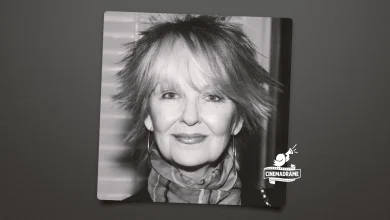
The Autumn of Iranian Studies in France; Charles-Henri de Fouchécour, Great Translator of Hafiz’s Divan, Passes Away
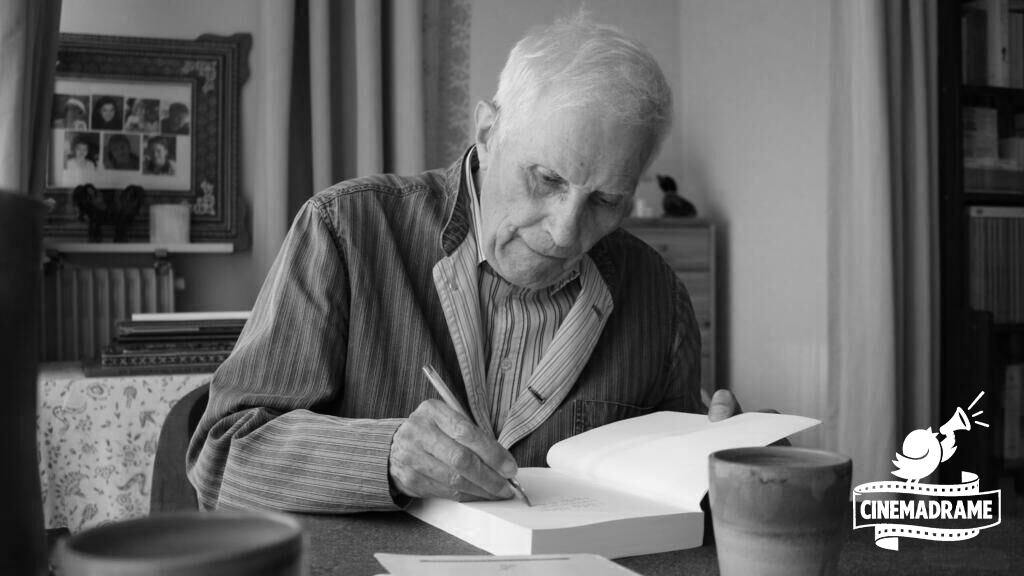
According to the CinemaDrame News Agency, Charles-Henri de Fouchécour, the prominent Iranian studies scholar, distinguished researcher of Persian literature, and renowned French translator who rendered a lasting service to Iranian culture by translating the complete Divan of Hafiz Shirazi and the Maqalat of Shams Tabrizi into French, has passed away. Following a memorial service in Beaumont-lès-Valence, the late professor’s body will be laid to rest in Paris’s famous Montparnasse Cemetery.
De Fouchécour spent his childhood and adolescence in Morocco due to his father’s profession as a railway engineer. Living in Morocco sparked his interest in Islamic culture and civilization. After learning Arabic in Tunisia, and upon the recommendation of his professor—who regarded Iran as one of the primary pillars of Islamic civilization—he headed to Paris to embark on his journey of learning the Persian language and literature.
He pursued his academic studies up to the doctoral level, writing his dissertation on “The Description of Nature in 11th-Century Persian Literature” under the supervision of Gilbert Lazard. During the formative years of his research mindset, de Fouchécour benefited from the guidance of great masters such as Jean Aubin, André Martinet, and Henry Corbin. He consistently emphasized that Henry Corbin left the deepest impact on his understanding of Iran’s vast identity—spanning from its Mazdean and Zoroastrian origins to the Islamic era.
In 1968, the late researcher traveled to Iran as a scholar for the French National Centre for Scientific Research (CNRS). During this period, he benefited from intellectual companionship and scholarly collaboration with distinguished literary figures and Iranologists, including Zabihollah Safa and Iraj Afshar. Throughout his research endeavors, he also remained deeply grateful to scholars such as Nasrollah Pourjavady, Bahaedin Khorramshahi, and Hashem Javid.
The masterpiece of de Fouchécour’s academic career is his precise prose translation, accompanied by extensive commentary, of the Divan of Hafiz into French—a monumental project that occupied 18 years of his life. He consistently opposed verse translations of Hafiz’s poetry, believing that attempting to rhyme Hafiz’s words in another language distances the translator from the original text and its authenticity. In a memorable description of the secret behind the longevity of the “Tongue of the Invisible” in the documentary Majnoon (directed by Mohammad-Ali Farsi), he remarked:
“Hafiz is difficult because he speaks so simply.”
Among the other invaluable works of this French thinker is the research book Moralia (Moralia: Les notions morales dans la littérature persane du 3e/9e au 7e/13e siècle), which examines ethical concepts in Persian literature from the 3rd to the 7th centuries AH. In the introduction to this work, he described the Iranian language and culture as an independent identity—distinct from Arabic, Pahlavi, and Greek—possessing its own specific characteristics and unique responses to history.