Speed, Character, and Technical Grandeur: Why “F1” is More Than Mere Entertainment
An Analysis of Joseph Kosinski’s Latest Work; Where the Art of Editing and Acting Challenges Action Genre Cliches
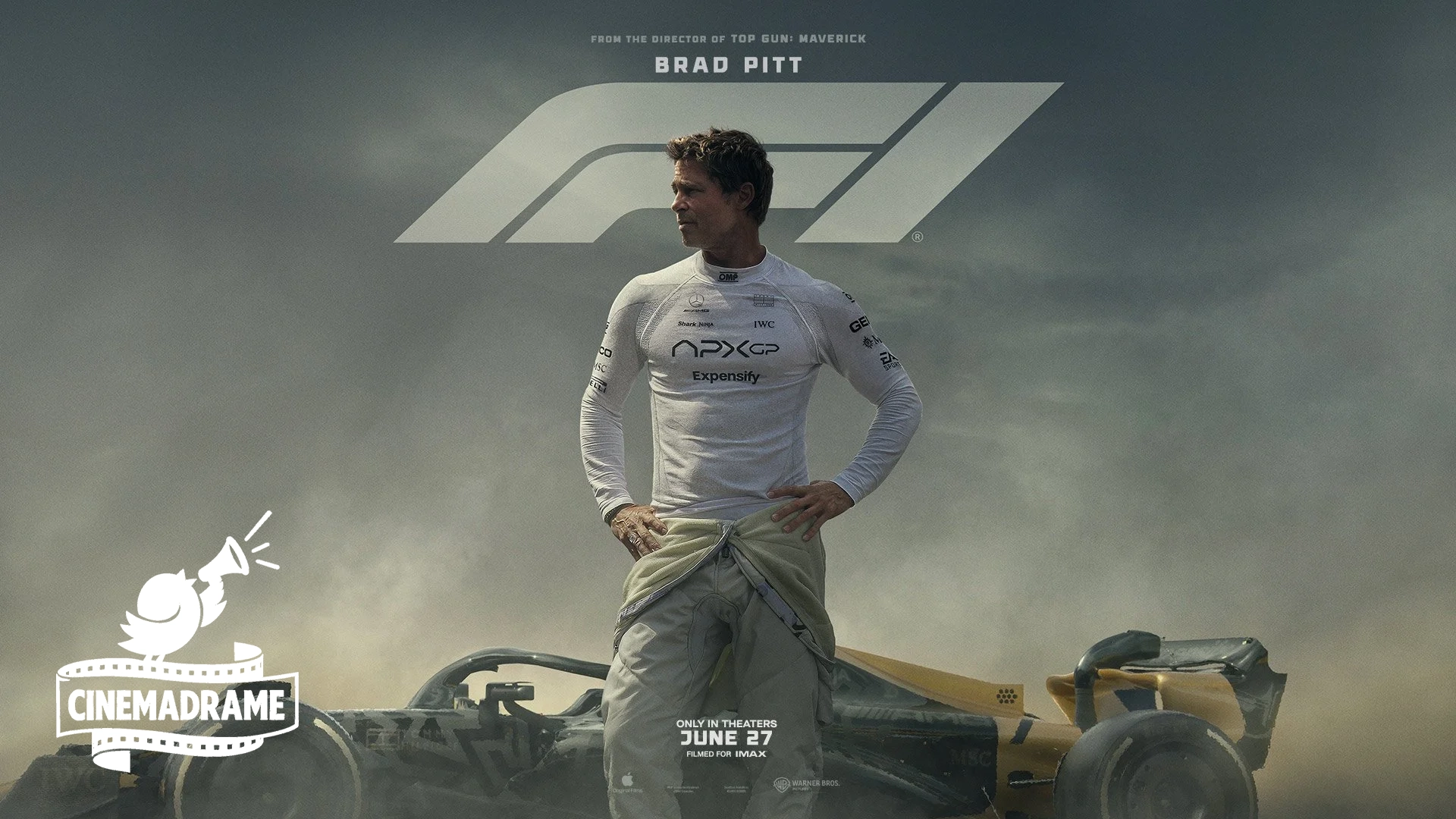
According to Cinemadrame News Agency, film critic Grace Mitchell writes in an exclusive review of the film F1: Following his staggering success with Top Gun: Maverick, Joseph Kosinski has once again proven that he has his finger on the pulse of mainstream cinema and high-budget action. His new film, “F1,” is not merely a visual report of Formula 1 racing; it is a meticulous study of speed, age, and redemption.
Kosinski is not alone in this venture; the presence of Brad Pitt as both actor and producer, alongside Lewis Hamilton as a technical advisor, has transformed the film from a fantasy piece into a detail-oriented docudrama. As expected, Hans Zimmer’s score adds an epic layer to the atmosphere, without which the thrill dominating the track would feel incomplete.
Perhaps the film’s greatest surprise is Brad Pitt’s brilliant performance. Now in his sixties, unlike his peers who often attempt to conceal their age, Pitt utilizes the subtle tremors of his face and the maturity of his gaze to craft a genuine “character.” He is no longer a recurring “archetype” (stock character) but a hero who feels the weight of time yet continues to flaunt his superiority on the track against young pretenders. Opposite him is Javier Bardem, who, under the director’s precise guidance, moves away from his usual repelling screen persona to deliver a nuanced and believable “grey” character.
The use of 16 cameras mounted on the cars provides the audience with an unmediated experience of speed. The cinematography in F1 behaves with dignity; it never obstructs the viewer’s vision nor confuses them with excessive movements. Despite an incredibly fast-paced rhythm maintained through 80% of the runtime, the editing never spirals out of control. Sequences of tire changes and crashes are not merely for show; they become part of the audience’s lived experience during the film.
Despite all the technical strengths, the film faces challenges in its portrayal of human relationships. The romantic subplot between the protagonist and the lead engineer feels somewhat cliched and “forced,” lacking the depth necessary to fully engage the audience. Furthermore, instead of building suspense, the filmmaker occasionally relies on momentary “shocks,” which—while exciting—lack lasting dramatic resonance.
What sets F1 apart from similar works is its perspective on wealth. In an era where many films serve as advertisements for luxury, this film focuses on the madness of the race and that pure moment when the driver is “in the heavens.” The protagonist doesn’t fight for money; he even loses bets to prove that the true value lies on the track and in sacrifice for the team.
F1 proves that cinema, in its essence, is a medium of entertainment—but an entertainment that demands culture and authenticity. With this film, Kosinski has not regressed; rather, he has taken a step forward in his professional career. This is a film that must be seen on the big screen to understand the true meaning of “high-quality mainstream cinema.”