Drawing Inspiration from Francis Ford Coppola and Sydney Pollack’s Classic Political Thrillers in ‘Silo’ Season 3

According to CinemaDrame News Agency, Michael Dinner, the veteran director and one of the core creative minds behind Apple TV+’s hit sci-fi series Silo, has revealed his deep creative debt to the legendary filmmakers of the 1970s.
Speaking on the heels of the show’s eagerly anticipated third season, Dinner—who initially joined the directing and executive producing team at the invitation of showrunner Graham Yost following their successful collaboration on Justified—shared that what was supposed to be a temporary six-month stint has now consumed three years of his life. He also confirmed that following the completion of Season 3, he has already wrapped filming portions of Season 4 in the United Kingdom.
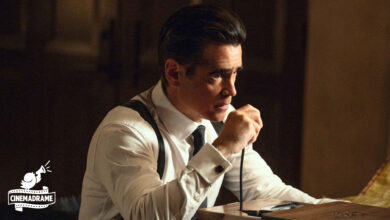
Season 3 introduces massive narrative and structural shifts, unfolding across two parallel timelines. The first timeline follows Juliette Nichols (played by Rebecca Ferguson) in a post-apocalyptic world 300 years into the future, as she fights to uncover the truth following a memory wipe. The second timeline serves as a contemporary prequel set in present-day Washington, D.C., peeling back the layers on why and how the underground shelters were constructed in the first place. This modern storyline revolves around Congressman Daniel Keene (Ashley Zukerman) and investigative journalist Helen Drew (Jessica Henwick), who inadvertently stumble into a harrowing government conspiracy.
According to Michael Dinner, the politically charged, whistleblowing atmosphere of the contemporary timeline offered a perfect canvas to pay homage to the classic paranoid political thrillers of cinema history, such as Three Days of the Condor, The Parallax View, The Conversation, and All the President’s Men. These masterworks by seminal directors like Sydney Pollack, Francis Ford Coppola, and Alan J. Pakula initially inspired him to pursue filmmaking during his youth.
To preserve the organic authenticity of his direction, Dinner intentionally avoided rewatching these films right before shooting commenced, ensuring the cinematography would not devolve into a derivative, frame-by-frame imitation. However, he believes the structural framework of these classics is deeply embedded in his creative subconscious. Visually, Dinner contrasted the two worlds by heavily employing handheld camera work for the futuristic storyline, while relying on smooth steadicams and dollies for the present-day narrative. Ultimately, Atli Örvarsson’s gripping score and the overlapping thematic core of both timelines—the relentless pursuit of truth and the sinister manipulation of human memory—seamlessly bridge these two distinct worlds together.