Emphasis on Global Political Empathy and Criticism of the Scarcity of Female Filmmakers at Venice
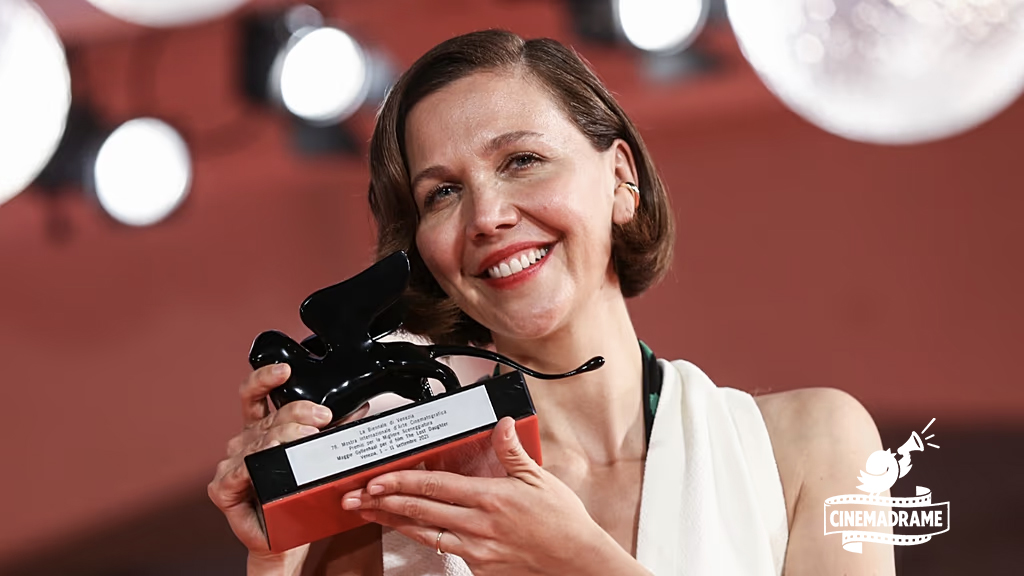
According to CinemaDrame News Agency, Maggie Gyllenhaal, Jury President of the 83rd Venice International Film Festival, emphasized the vital need for “empathy” in today’s world while reflecting on the prevailing global political climate during the opening press conference.
Responding to a question on whether cinema should be inherently political, Gyllenhaal stated that filmmakers and audiences must remain open to a diverse spectrum of stories and viewpoints. “For me, the answer to that is tied to empathy,” she explained. “I believe cinema offers us an opportunity to discover empathy within ourselves. Personally, I don’t believe there is any subject or filmmaker whose voice shouldn’t be heard.”
She continued: “We can challenge ourselves to listen to the stories of the most corrupt or twisted people because it creates the possibility of understanding and empathizing with them. It even forces us to confront those dark, wrong, or corrupt parts that might exist within ourselves, even if we fight against them. If films offer an honest look at the human experience of others, they are fundamentally and inevitably political, just as they possess many other qualities.”
Joining Gyllenhaal on the main competition jury are prominent figures including Kaouther Ben Hania (Tunisian director and screenwriter of The Voice of Hind Rajab), Daniel Blumberg (British composer and artist), Francesco Casetti (Italian academic and scholar), Xavier Giannoli (French director and screenwriter), Shahrbanoo Sadat (Afghan director and screenwriter), and Johnnie To (renowned Hong Kong director and producer).
However, the main competition jurors did not join her on stage for the opening press conference. Instead, Gyllenhaal took the stage alongside the jury presidents of the festival’s other competitive sections: Valérie Donzelli (Orizzonti Jury President) and Carolina Cavalli (Luigi De Laurentiis Award for a Debut Film Jury President).
A significant portion of the journalists’ questions focused on the sparse representation of women in the main competition, which features only two female directors.
Gyllenhaal initially joked that this might suggest male directors are simply better than female ones, before turning to a more serious analysis of the issue: “This is a structural and systemic problem.”
Pointing out that securing financing for film projects is vastly more difficult for women, she highlighted a deeper root cause: “Is it possible that the subjects women want to make films about—due to their distinct lived experiences in this world—aren’t always recognized as ‘high art’? Who decides what is good? Who determines the value and prestige of a work?”