Alley Cats Animation Review: Netflix’s New Series Voiced by Ricky Gervais Is Half Crude, Half Sentimental, and Mostly Forgettable
According to CinemaDrame News Agency, film critic Charlotte Thompson wrote in an exclusive review: Experience has shown me that cat-haters and cat-lovers describe them in precisely the exact same way; the only difference is their tone.
The former group scowls and complains that “cats are total assholes.” The latter says the very same sentence with an affectionate smile. For the feline fan club — of which I consider myself an official member — that abrasive behavior is part of their charm; they are so stubbornly, charmingly, and often hilariously selfish that even the airhead ones look as though they possess a complete inner life. Moreover, they aren’t always mean-spirited. They can just as easily captivate you with their softness, sensitivity, and loyalty.
Alley Cats, Ricky Gervais’s new animated series for Netflix, understands this well. Much like my own domestic cats, the show follows its own slow rhythm, abruptly swinging between ruthless cruelty and cloying sweetness. Yet, due to a lack of creative depth to fully pull off both tones, it ultimately turns into a comedy of existential dread that is mistakenly hilarious and only occasionally touching to a modest degree.
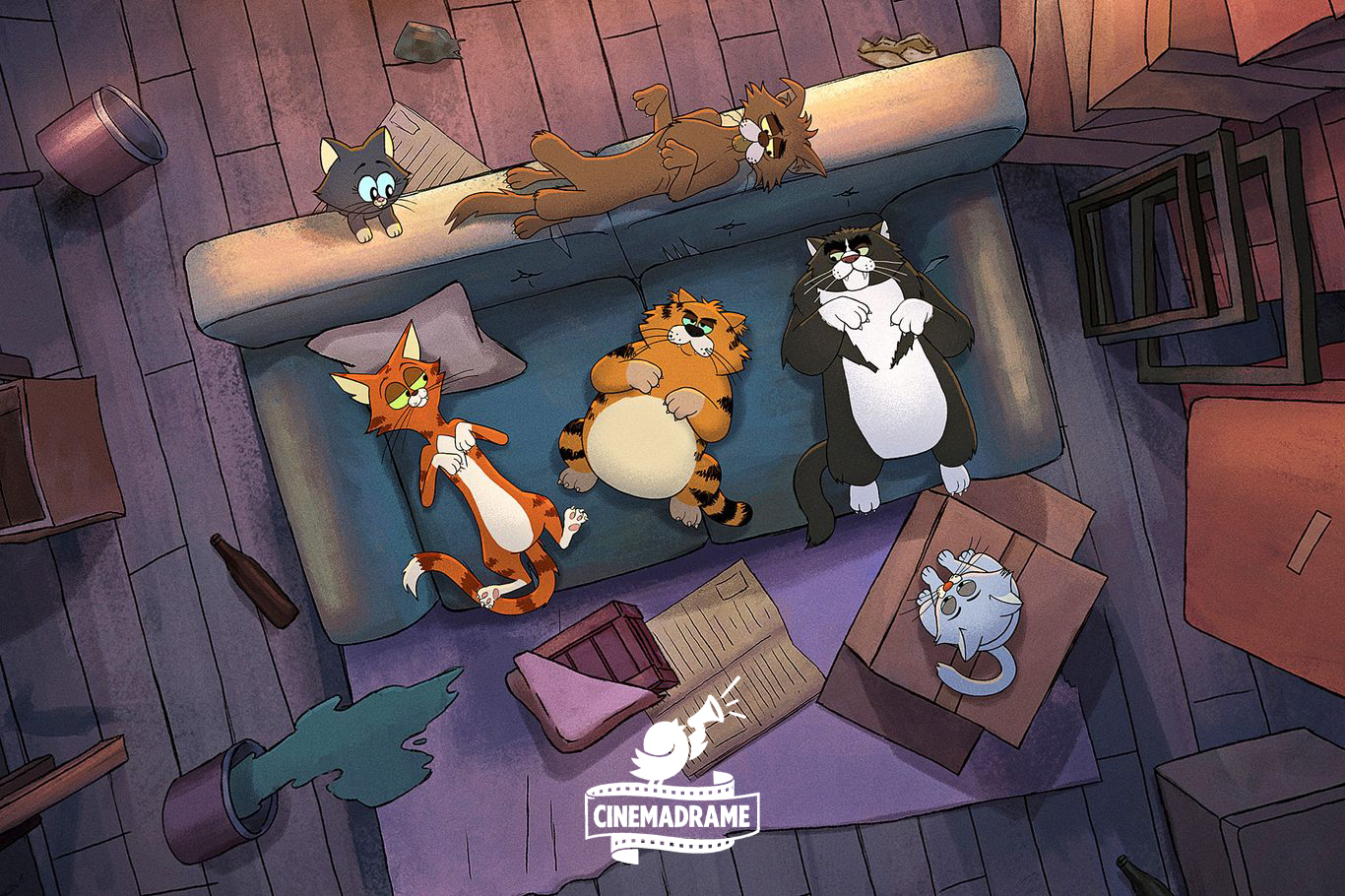
In addition to writing and directing, Gervais voices the lead character, Gus: a fat ginger cat who acts as the de facto leader of a stray cat pack. Calling them a ragtag crew might be the kindest description; although the animation by Blink Industries is crisp and clean, the cats’ personalities are anything but.
Fang (voiced by Andrew Brooke) is a muscular tuxedo cat who is always itching for a fight. Olive (voiced by Diane Morgan) is a distracted orange cat desperately eager to mate. Another mangy creature is simply named Vomit (voiced by David Earl) — likely named after the reaction usually provoked by his endless stories about connecting with every filthy thing imaginable. The only member of the group who seems fit for polite society is Pounce (voiced by Tom Basden), a house cat whose primary function in this circle is being mocked for everything from his lack of courage to his pronunciation of words.
Every day begins with the crew lounging in the abandoned shack they call home, watching whatever plays on a television set that somehow still works — ranging from dating shows to historical documentaries and the news. Eventually, they venture out to hunt for food, meet up with friends and foes, and settle whatever ridiculous debate was sparked by watching TV. Then, they retreat back to their shack to repeat the whole process tomorrow.
Gervais noted that the voice recording was done as a group rather than individually, and that dynamic is abundantly clear in the cast’s fluid chemistry. Their voices sound remarkably like a group of old friends trading sharp jokes, and sitting alongside that loose vibe has its charms. But just like anyone sitting next to a tight group of old friends, just because they find themselves amusing doesn’t mean listening to them is inherently engaging. Although the first season runs for just six episodes under 20 minutes each, it feels far longer when vast stretches of time are spent on aimless chatter.
The cats’ tranquil routine is disrupted during one of their daily outings when they cross paths with a small, lost grey tomcat (voiced by Joe Hartley). In a sudden burst of generosity, Gus promises the kitten they will help him find his way home. Their efforts form the main backbone of this season’s plot — though as usual, it isn’t long before they get derailed by random side quests.
Alley Cats operates in two wildly different modes. The first consists of crude, explicit jokes. Gus, Fang, and Vomit spend their days debating things they’ve done or want to do, arguing over who is stronger, and hurling elaborate insults at one another. These exchanges mostly devolve into a droning hum of meaningless sarcasm, harsh descriptions, and empty threats.
The show’s other mode is over-the-top sentimentality. No matter how much the cats brag, they are acutely aware of their own insignificance and vulnerability. Cats they know get hit by cars, abandoned by owners, or perish in filthy corners. The presence of the little tomcat and his wide-eyed questions about death or human cruelty accentuates the painful nature of existence.
The kitten’s presence also encourages Gus to unburden his soul, showing his softer side by reciting poetry or giving hugs. In one vulnerable moment, he even tries to bargain with a God he isn’t sure exists — a surprising turn of events for a character created by one of pop culture’s most staunch atheists. In theory, these moments sound profoundly moving, but in practice, they land with less punch. These low-brow characters simply aren’t built to carry such heavy, yet predictable, emotional weight.
Then again, I suppose real cats aren’t either. I might project grand existential feelings onto my own cats — finding purpose in caring for them, taking joy in loving them, and nursing a premature grief knowing they will pass away one day. So I can relate to Gus’s protective feelings toward the kitten or the group’s sorrow while watching an old acquaintance fade away. But my own cats, I suspect, would relate far more to the opening scene of the series: when Pounce gets slapped and complains, “What was that for?” and Gus merely shrugs, “I’m a cat. That’s what cats do.” It isn’t a satisfying answer, but it really is just what cats do.