Emmy Nominees Reflect on Memories, Collaboration, and the Challenges of Their Shared Personal and Professional Lives
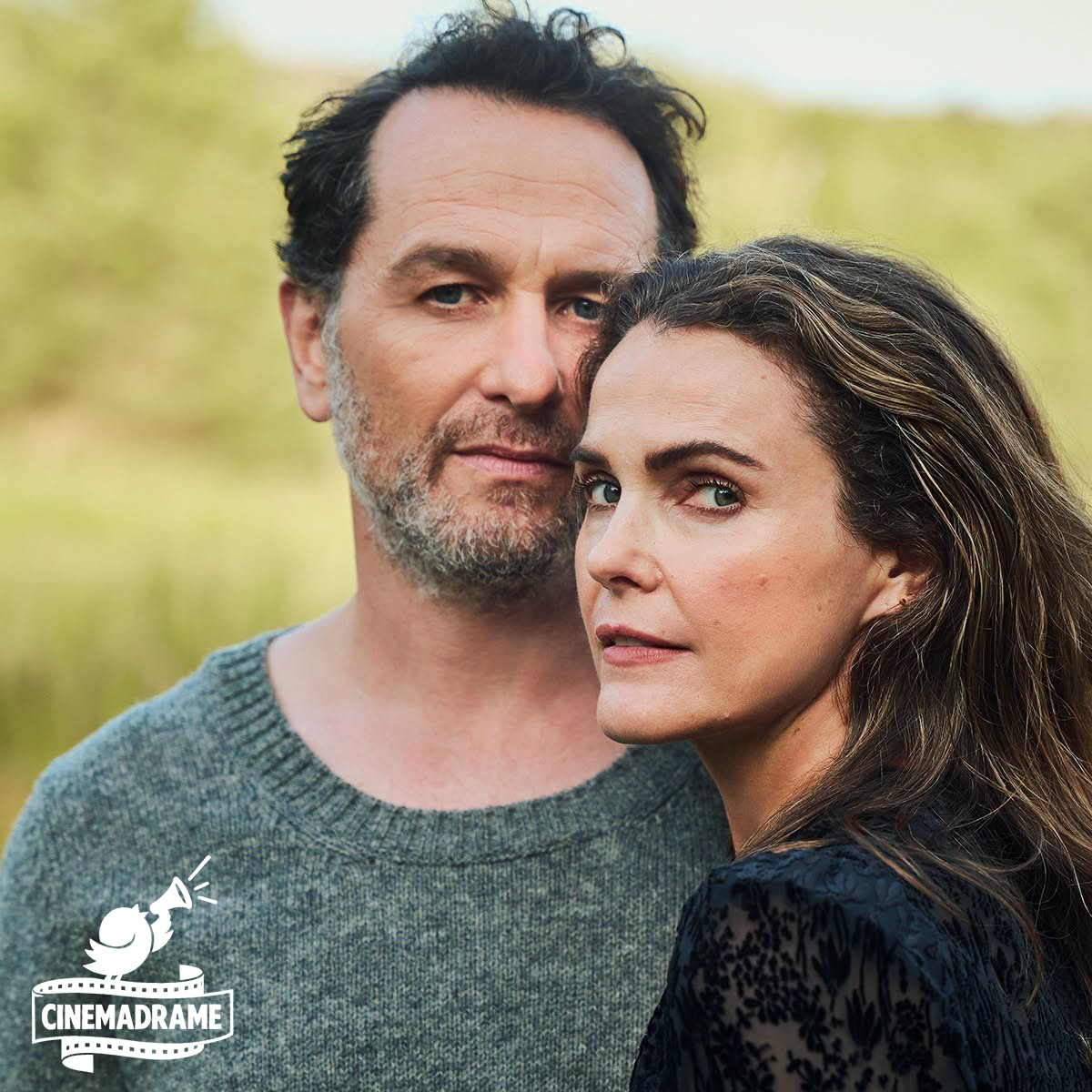
According to CinemaDrame News Agency, for the very first time this year, Keri Russell and Matthew Rhys are attending the Emmy Awards together as nominees for different projects. From Russell’s role as a flustered diplomat in The Diplomat to Rhys’s portrayal of a small-island mayor in The Beast in Me (and his role as a wealthy, psychotic heir in The Beast in Me) — along with executive producer nominations for both — the couple has earned a total of five nominations.
Many couples have been nominated for Emmy Awards in the same year before; figures like Tracy Letts and Carrie Coon, Sarah Paulson and Holland Taylor, or Lucille Ball and Desi Arnaz. However, fans might feel a special connection to Russell and Rhys, as the last time they attended the Emmys together as nominees — back when they starred in The Americans — they were exceptionally witty and charming. Following the final season of that series in 2018, when Rhys won the Award for Best Lead Actor in a Drama Series, he joked in his acceptance speech that if he proposed to Russell on stage, she promised to punch him squarely in the mouth.
Why had Russell said such a thing? Recalling that night, Rhys asks, “Well, do you remember that gentleman?” and retells the story: Just before Rhys won, Glenn Weiss, who received the directing award at the Oscars, proposed to his girlfriend on stage and dropped to one knee before her.
Rhys recalls, “I caught a bit of flak for that joke.”
Russell asks in surprise, “Really?”
Sifting his Welsh accent into an American one, Rhys says, “They were saying, ‘Why are you ruining that gentleman’s moment?’ And I said, ‘Because we were all given 45 seconds and that guy got eight minutes!'”
Russell says, “Do those things on your own personal time! Doing anything public is terrifying to me.” She adds that if Rhys had proposed: “I would have died! I would have said no and said goodnight!”
Rhys envisions her reaction: “Get off the stage! Take your little award and go!”
In fact, eight years later, whether on television or in real life, the couple is still not engaged. Russell usually refers to Matthew as “my guy.” Whatever definition they have of their relationship after 13 years has developed off-camera — and that is precisely how the 50-year-old Russell and 51-year-old Rhys want it. However, they decided to do a joint interview at a hotel in upstate New York; a hotel they use as a getaway from their home in Brooklyn to unwind with friends they call their “mountain family.”
I intended to meet them a few days earlier, but flooding had washed out the roads between Brooklyn and their retreat. Now, on the final day of their vacation — squeezed between the end of filming Season 4 of The Diplomat in late June and their return to ordinary life — I join them. They are lingering over their return to reality. A hotel employee who seems to know them well asks Russell if she wants lunch; she declines, saying she wants to save room for the “final mountain family dinner,” and lets out a wolf-like howl.
This trip comes after a remarkably successful professional run for both of them: The Beast in Me on Apple TV+, a comedy-horror about an isolated community whose mayor denies the presence of evil forces in town, became a massive hit and secured the highest number of nominations among this year’s new series. Netflix’s limited series The Beast in Me, in which Rhys shines as a murder suspect, topped the streaming platform’s viewership charts. And Russell — competing against Zendaya for Euphoria and Rhea Seehorn for Pluribus — might be the night’s most deserving nominee, having been a television star since Felicity at age 22 without ever winning. This year, she swept best actor and actress honors for The Diplomat, which, combined with a record number of Emmy nominations for the third season of Netflix’s political drama, makes her a dark horse in the race.
Most actors claim they don’t care about awards. Yet the night of the Emmys feels worlds away in this remote rural setting, as Russell nibbles from a small snack plate and Rhys shares stories from his early career. They are entirely in vacation mode: 10 minutes after the scheduled interview time, Russell finds Rhys and me in the attic, holding a can. Rhys wears a faded white t-shirt with long, messy hair; she wears denim overalls and white sneakers. Russell and Rhys are deeply self-effacing and finish each other’s sentences.
Due to the rarity of their joint interviews or perhaps each one’s unique charm — Russell is candid and approachable while Rhys speaks softly — much of what they say feels like a secret shared in confidence. Sometimes, that is literally true. When Rhys talks about his desire to vary his roles, Russell’s eyes light up, wanting to gossip.
“Tell the job offer you got just today,” Russell says.
Rhys declines.
Russell insists, “It’s fine — who cares? The offer you got today. It’s so funny!”
Rhys says, “A prominent writer might read Variety magazine and say, ‘He’s mocking me.'”
Russell persists, “We’re not mocking him, it’s just so funny!”
Russell’s point is how easily an actor can get pigeonholed and repeatedly asked to do the same thing. After six seasons on FX’s The Americans, where they played Soviet spies in America, this was a sensitive topic. I ask Rhys about his first TV project after that series, HBO’s Perry Mason, but he reminds me that immediately following it, he starred in the limited series Death and Nightingales for the BBC in Ireland.
Russell says, “You aren’t very strict. You say, ‘Great, I’ll do it.’ But for me, it was terrifying.” It took five years for Russell to appear as a lead in a television series again.
For her, receiving the script for The Diplomat was the answer to what her next major role would be. But the project came with a catch. The series, centered on the U.S. Ambassador to the UK, had to be filmed in London. Russell, who had built her life in New York and worked there during The Americans, faced the prospect of leaving behind what she loved.
“I love my life — my quiet, small life,” Russell says. “I like hanging around the house, doing laundry, and organizing everything. Lately, the roles we take mean being the lead, which is a full-time job. You have to be patient and just focus on that. So moving to the UK was a major family decision.”
Debora Cahn, creator of The Diplomat, says of Russell’s hesitation: “She wasn’t looking for a job like this. It was clear to me that if she didn’t have a good experience, there wouldn’t be a second season. If it wasn’t right for her life and family, there was no continuation.”
The role fit Russell partly because the more Cahn got to know her, the more she integrated the actress’s own personality traits into the character. Cahn says, “We all see this incredible beauty and grace. But she herself feels like she’s constantly falling apart, held together by glue and string. Everyone who sees her says, ‘The world doesn’t see you that way.'”
The character Kate Wyler also maintains a polished exterior while harboring inner doubts. Her marriage to a prominent diplomat played by Rufus Sewell — who becomes Vice President in Season 3 — is fraught with resentment and friction. Both have felt at times that they sacrificed their own careers for the other. Now, they are attempting to be the most successful versions of themselves, even if it means living on opposite sides of the ocean and competing for the President’s attention, played by Allison Janney.
This dynamic differs from Russell’s real life, but some themes overlap. “It’s a show about marriage,” Russell says. “It’s about professional compromises, competition, and geography.” She quotes Cahn regarding long-term relationships: “One day you wake up and you can’t even stand the sound of the other person breathing.” Yet, after spending Season 3 apart, they decide at the end of the season to give their relationship another try. “I’m not saying their dynamic works for everyone,” Russell says, “but the show is genuinely pro-marriage.”
Russell watches The Diplomat; as an executive producer, she feels a responsibility to keep track of the storyline. She also watches The Beast in Me quietly with her second child. (Russell and Rhys share a 10-year-old son, and Russell has two older children from a previous marriage.) Rhys has more complicated feelings about watching his own performances, but he remained in the room and endured it while his family watched. “Out of all the shows, watching this one is much more entertaining and easy,” Russell says.
That appeal stems partly from the unique tone established by creators Katie Dippold and Hiro Murai. The Beast in Me shifts between human comedy and heart-wrenching scenes. It is a show where Rhys’s humorous depiction of a man in denial sits alongside evil spirits and magical curses.
Rhys’s Mayor Tom Loftis wants to preserve his island town as a tourist destination. But there is another reason he denies the curse’s reality: he worries for his son Evan, who faces real danger given the supernatural circumstances of his birth and his mother’s death. Rhys held onto that fear and let it guide his performance. He says, “His ultimate goal is to see his son grow up. That grounds the performance immediately. You tell yourself, ‘I need my son to grow up, and I will ignore the madness around me.'”
Dippold says, “Having someone who is so funny yet delivers the most emotional scene possible is invaluable. You see everything in his eyes. There’s a version of this character who is just a fool, but Matthew brings you along with him.”
During production in Boston, the show’s unusual tone felt somewhat concerning. Rhys says, “Everyone was worried about how it would be received. We kept asking, ‘Is the tone right? What tone is this?’ It’s gratifying that people want original, risk-taking programs like this.”
Russell adds, “It serves as a welcome escape from current conditions. So far, there’s no mention in the show of real-world events or the destruction of our country.”
Rhys says, “Yes, there is. In the basement, that monster is Trump.” (In the show, the monster in the basement is a killer clown chasing Tom.) Russell doesn’t realize he’s joking until Rhys clarifies. Russell is right that the town’s monsters exist outside the framework of our politics.
“It’s a delightful escape to enjoy, and that’s a unique quality,” Russell concludes. The Diplomat, set in international politics, similarly depicts diplomacy in a pre-modern era style. It evokes the feel of a show like The West Wing or Homeland. The series focuses on Kate’s internal world. Kate often fails on the brink of victory, and Russell loves playing that.
“You always want to be losing,” she says. “You don’t want to act like you’re the best surgeon in the whole country.” She learned this during one of her earliest roles on Felicity. “Before I really understood what acting was, I saw guest stars dressed much more attractively than the character of Felicity. I thought to myself, ‘I don’t need to do any of that.’ I didn’t wear makeup, I wore oversized sweaters, and that gave me tremendous freedom. You can be funny and comfortable.”
Russell’s four-season run on Felicity starting in 1998 followed her time on the Disney Channel program that also introduced Britney Spears, Justin Timberlake, and Ryan Gosling.
“I had no formal training,” Russell says, “unless you count The Mickey Mouse Club as training.”
Rhys and I agree with her point that she must have learned the fundamentals of camera acting on that show. Russell says, “Yes, but Matthew is a trained actor. He studied at the Royal Academy of Dramatic Art in London. He is a meticulous, trained actor, and I have none of that background. I can work instinctively, but I lack academic training.”
Rhys says, “First of all, you have a dance background. If you look at the end of The Americans, you were always doing the fight scenes because you didn’t need rehearsal. Your physical awareness is unmatched. And I think The Mickey Mouse Club was very important training.”
On Felicity, Russell played a young woman who abandons her plans to pursue a personal passion. The series earned Russell a Golden Globe Award and turned her into a star. “Back then, network shows were 22 episodes long, which was exhausting,” Russell says. “In the summers, I had opportunities to audition for films, but I preferred going to my friend’s beach house. My goal was just to pay my rent and be a regular person.”
She maintained an intense schedule as a teenager as well. At one point, she traveled constantly to complete two Disney projects. In 1992’s Honey, I Blew Up the Kid, she played a babysitter who ends up in a giant toddler’s pocket.
Russell says, “Disney would find these kids from middle America — in my case, Colorado — whose parents knew nothing about the business, and they’d sign you to contracts. I worked on the movie in Los Angeles all week and then took a red-eye flight to record The Mickey Mouse Club on Saturday.”
Rhys says he watched Honey, I Blew Up the Kid: “I said to myself, ‘She’s going to be my wife!'”
Russell seems to prefer leaving her early career behind. For Rhys, memories of his early work come more easily. While Russell was starring in Felicity, Rhys was an emerging star in London theater. After working with various classical theater companies, he played the lead in a 2000 West End production of The Graduate opposite Kathleen Turner.
Rhys recalls, “I had never experienced celebrities coming backstage to meet the actors after a show. Turner always invited me to have a drink with whoever visited. A lot of famous people came. Dustin Hoffman came, but he didn’t come backstage after the performance.”
In Mike Nichols’ 1967 film adaptation, Hoffman played the role Rhys performed on stage, making the behavior seem unusual. Rhys says, “We think he didn’t like the performance. Or maybe he was just shy, who knows!”
Russell can relate to that feeling. One of her major roles between Felicity and The Americans was in the 2007 film Waitress, which was adapted into a Broadway musical in 2016. Russell says she cannot bring herself to watch the musical.
“It’s strange to think about a character you played and suddenly see them singing on stage about baking pies!” she says.
In both Felicity and Waitress, Russell projected an innocent charm. That quality made her an intriguing choice for a covert agent in The Americans. FX chief John Landgraf cast Russell, stating she needed to be someone unexpected. Who would have thought the beloved teen star possessed such a tough edge?
Beneath all of Elizabeth’s rage was a character who felt deeply and was damaged. Rhys tells Russell, “There was a softness in your performance. Even though people said Elizabeth was ruthless, when you watched your performance, you didn’t play her that way.”
Rhys got his break through luck: he intended to return to London but stayed in New York to step into a play role for Cillian Murphy. He received the pilot script and rehearsed lines with co-star Adam Driver.
Rhys had just finished five seasons on Brothers & Sisters. He says, “My role model was Sally Field. I had never seen a lead actor guide a set like that. She taught you how to conduct yourself, be professional, and respect everyone’s work. She said you must come to work prepared because it’s a privileged position that shouldn’t be taken for granted.”
He compares Field to Russell and Claire Danes — his co-star in The Beast in Me — noting that Danes arrived thoroughly prepared and professional, expecting the same from others.
Russell says, “As you get older, you just want to work with good, professional people. I don’t need new friends; I have friends and a partner. I just don’t want to deal with other people’s drama. I want to work with professionals.”
Work is a passion for Russell and Rhys, but the surrounding noise is more complicated. Russell says, “We had a photo shoot yesterday, and it was still stressful. Award shoots and ceremonies feel unnatural. This year, I wondered if I should take a sedative.”
Rhys agrees: “Every year we say, ‘Let’s enjoy this moment because it might be the last time.’ But I never enjoy it because I’m always anxious and stressed.”
Yet working itself isn’t stressful in that way. Rhys says the moment “cut” is called, he returns to normal. Stephen Root, Rhys’s co-star in The Beast in Me, says Rhys would wave to tour buses on his way to the set. Russell masks her stress as well; when receiving her Screen Actors Guild Award, she was visibly astonished and thanked her co-stars.
Russell says, “The current political climate is very complex and heavy, and that worries me too. If you say one wrong word, there are consequences.”
Rhys adds, “And you’re starring in a show about politics.”
Russell says, “That’s an added pressure. Politicians chose that path themselves, but I don’t want to speak on behalf of anyone. We live in a time where there’s no room for error.”
The idea of collaborating again comes up, and Russell says, “It would have to be the right project for many reasons, but it’s an exciting idea. A special energy forms between people when working together, and that was a major part of our shared experience.”
Rhys’s passion project is a story rooted in Welsh history. He intends to rewrite the script alongside a writer.
“Because we are a small nation, it makes us act with more pride and fierce loyalty,” he says. “The Scots and Irish have been very successful in culture, literature, and cinema, and Wales is making its effort too.”
Russell describes Welsh culture this way: “The entire culture is remarkably artistic and intertwined with storytelling. But I’d say it’s less combative and more mournful and poetic.”
Rhys says, “Because we lost every war! If grief were an Olympic sport, the Welsh would always be on the podium.”
In The Diplomat, Russell’s character navigates the cultural differences between blunt Americans and reserved Britons. But her relationship with Rhys functions like a balance. Russell speaks more directly while Rhys is more reflective, and they complete each other’s thoughts.
So how do two actors who met in the glitzy world of cinema remain so grounded?
Rhys says, “We’ve experienced many ups and downs in our profession. You realize how little control you actually have, so you appreciate moments of success while remaining aware of how fragile it all is.”
Russell says, “Most of our friends aren’t actors, and we aren’t all that famous. People don’t pay much attention to us, which is great. Some of our neighbors are extremely famous, and life is difficult for them.”
Russell doesn’t face those challenges: “I like our level of life. I like having a job and being able to go to a nice restaurant occasionally. Sometimes I buy my own dresses for events because I’m not overly famous. That’s the reality of our position, and I think it’s completely ideal.”
Rhys concurs: “Yes, that balance is completely ideal.”