Pouran Derakhshandeh criticizes the state of children’s cinema and filmmaking challenges in Iran: Who will answer for our despair?
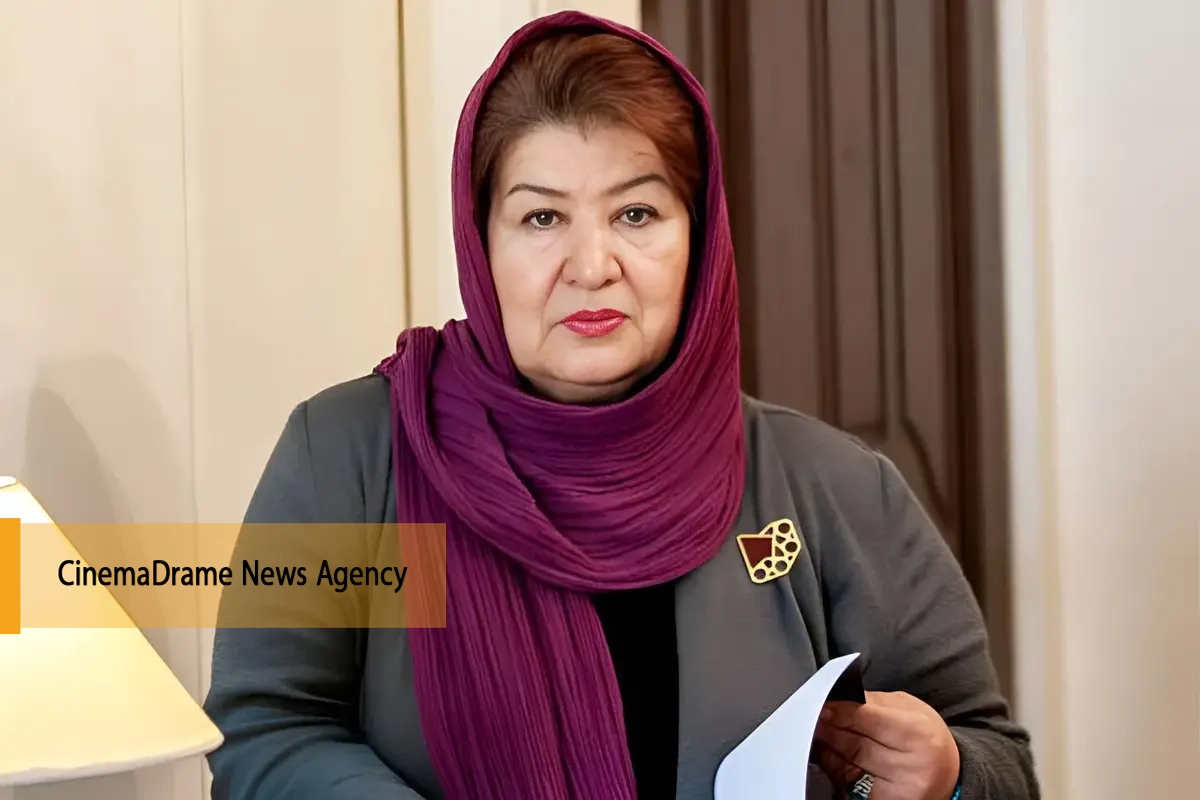
According to CinemaDrame News Agency, Pouran Derakhshandeh, criticizing the current state of children’s cinema and the difficulties of film production, said: “I was prepared to make a film for nine years but never received the permit, and now, like many others, I have lost my motivation. Is there anyone who can answer for our despair and this instability?”
The director of Little Bird of Happiness, Eternal Children, and Hush! Girls Don’t Scream, who has for years awaited a production license for Hush! Boys Don’t Cry, recently received a Lifetime Achievement Award from the Nelson Mandela Foundation—an honor she considers deeply meaningful, as Mandela devoted immense effort to the children of his nation and the future of his country. She remarked that she learned much from him, including forgiveness and turning away from conflict.
Derakhshandeh, who emphasizes that throughout her career she has worked for Iranian society with the goal of raising awareness—especially for children—said in an interview: “Children are the future of every country. If they are raised with humanity, forgiveness, and kindness, naturally they will build a more peaceful future. That is why this award is especially valuable to me. Yet despite my efforts over the years, I was unable to do what I wished to achieve.”
Referring to reports in the past year about physical and sexual abuse of children in schools—most notably at a boys’ school by its vice principal—she continued: “Each time I read such news, I felt sick and asked myself what I could have done that I didn’t. My role as a filmmaker was to raise awareness, but I was not given the opportunity to work. Yet both the media and we filmmakers should demand answers. When we witness crises in society, we should talk about them. Instead, everything is buried in silence—especially recently, when the situation has become so demoralizing that few pursue these issues anymore. I, too, have become one of the unmotivated, with no hope left.”
Speaking about Hush! Boys Don’t Cry, which still has no production license, she said that the lack of authorization in recent years has drained her will to follow up: “I have not worked for nine years. Why? Someone must answer why I, in all this time, could not make even one film—despite being fully prepared. We must be told: in these years, what has been done for children’s and youth cinema? What have we done for the new generation—a generation we have always lagged behind, and from whom we are falling further behind day by day, while they continuously move forward?”
The director of A Candle in the Wind pointed to the uncertainty of working in cinema: “We are constantly worried that the ground will be pulled out from under us, while at this moment—especially after the 12-day war—we should have been far more active, with greater resources given to filmmakers. Filmmakers should have been supported and invited to work by the government. Unfortunately, I don’t know where we stand in this story.”
Derakhshandeh, who late last year received a production license for a script titled Mother Earth, concluded by saying that filmmaking itself has become a dream because of obstacles in obtaining permits: “The difficulty of conditions has reached the point that even if you secure a license, the cost of production is so high that making the film becomes impossible. With prices changing constantly, there is no stability or security for work. These are just some of the problems faced by filmmakers who have been forced to remain at home. In this situation, one must ask: where is this heading, and how can it be controlled? What will become of children’s cinema? Are we all supposed to turn toward one single type of filmmaking?” / ISNA